

| Parameter | Value |
|---|---|
| Lighting | Moderate |
| Water Flow | High |
| Care Level | Moderate |
| Temperament | Peaceful |
| Placement | Mid/High |
| Origin | Caribbean |
| Size | Medium |
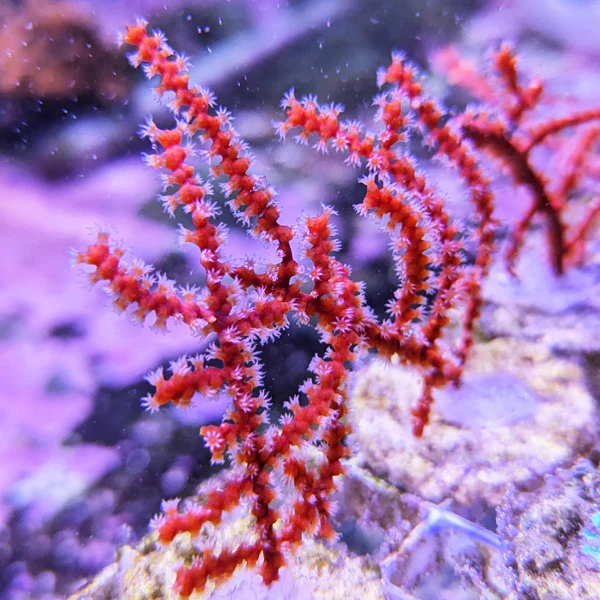
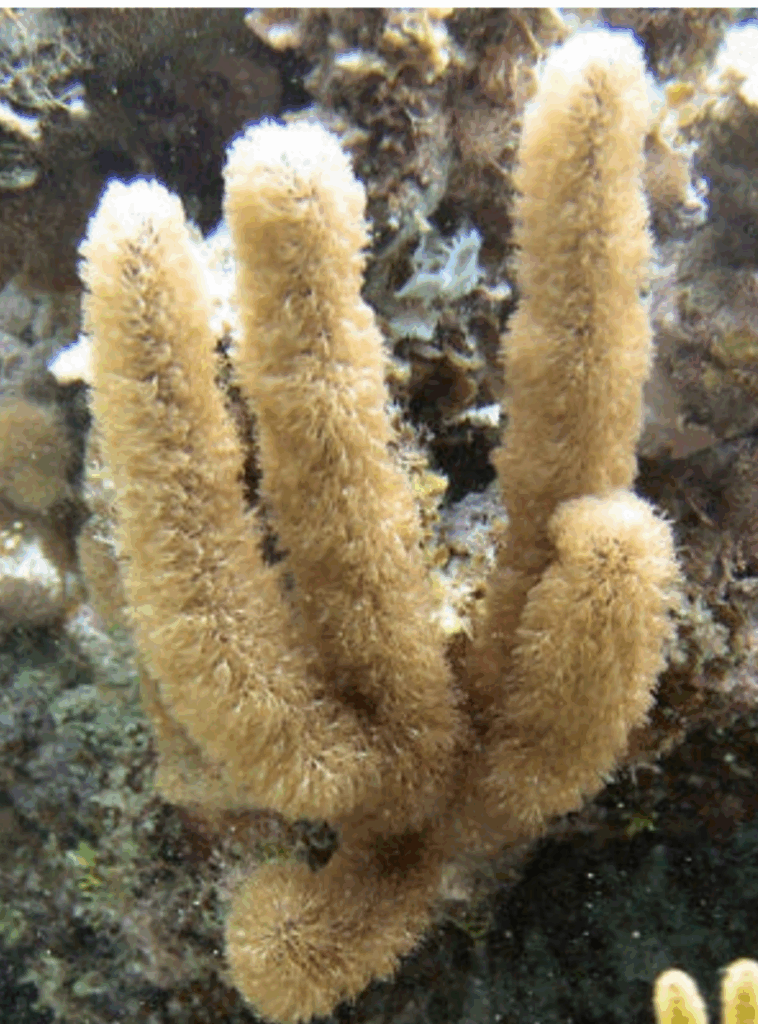
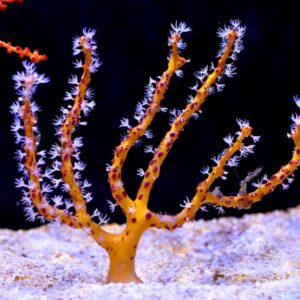
The Purple Gorgonian (Muriceopsis sp.) is a captivating octocoral native to Caribbean reefs, prized for its rich purple branches and feathery profile. Its elegant arborescent growth pattern creates dynamic natural flow and visual interest in captive reef systems.
Physical Description
This gorgonian produces pinnate or bushy branches supported by a tough internal gorgonin core. It features an attractive deep violet or lavender coloration along its stems, adorned with numerous tan or white polyps. When polyps extend fully, the coral develops a soft, plume-like texture that sways gracefully with the current.
Distribution and Habitat
Originating from the warm subtropical and tropical waters of the Caribbean Sea, this species colonizes shallow patch reefs, rocky ledges, and fore-reef slopes. It is typically anchored to carbonate rock in areas exposed to persistent surge and oceanic wave action.
Lighting and Flow Requirements
Provide moderate illumination to satisfy the photosynthetic requirements of its internal zooxanthellae. High water movement is crucial to prevent nuisance algae from smothering the branches and to ensure efficient gas exchange.
Feeding and Nutrition
Although photosynthetic activity provides substantial daily energy, it functions as an active filter feeder. Offering regular supplemental target feedings of copepods, rotifers, marine snow, and phytoplankton promotes rapid branch growth and maintains dense polyp coverage.
Placement and Compatibility
Affix this specimen firmly in the mid to high zones of the rockwork directly in the path of vigorous water circulation. The Purple Gorgonian is entirely peaceful and will not sting neighboring corals, though adequate spacing prevents overcrowding as branches expand.
Conservation Status
Populations across the Caribbean are safeguarded by marine protected areas and sustainable harvest regulations. Classified as Least Concern by the IUCN Red List.



Reviews
There are no reviews yet.