
| Parameter | Value |
|---|---|
| Diet | Herbivore |
| dKH | 8-12 |
| Maximum Size | 55 cm (21.7 in) |
| Minimum Tank Size | 300 gallons (1136 L) |
| pH | 8.1-8.4 |
| Temperament | Peaceful |
| Temperature | 72-82 F (22-28 C) |
| Weight | Approximately 2,000 g (4.4 lbs) at maximum size |
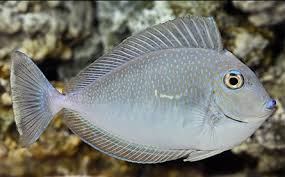
The Vlamingii Tang (Naso vlamingii), also known as the bignose unicornfish or Vlaming’s unicornfish, is a species of marine ray-finned fish belonging to the family Acanthuridae. It is found in the Indo-Pacific region and is popular in the marine aquarium trade.
Physical Description
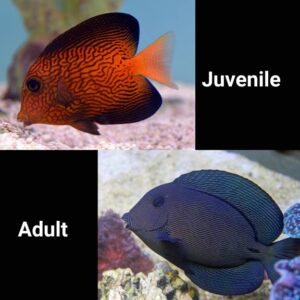
The Vlamingii Tang has an elongated oval body that develops a bulbous nose and a horn-like projection on the forehead with age. The overall coloration is greyish-blue with the ability to change color dramatically. Juveniles and subadults have a more mottled appearance with blue spots and lines. The dorsal fin has 6 spines and 26-28 soft rays while the anal fin has 2 spines and 27-29 soft rays. This species reaches a maximum total length of 55 cm (21.7 in).
Distribution and Habitat
The Vlamingii Tang is found in the Indo-Pacific from East Africa to Hawaii, Japan, and the Great Barrier Reef. It inhabits shallow coral reefs and seaward slopes at depths between 2 and 50 meters.
Diet and Feeding
The Vlamingii Tang is primarily herbivorous, feeding on benthic algae, but also consumes zooplankton. In captivity, it should be offered a varied diet including marine algae, spirulina, mysis shrimp, and high-quality marine fish preparations.
Aquarium Care
The Vlamingii Tang requires a very large aquarium of at least 300 gallons with excellent water quality and strong water flow. It is generally peaceful and can be kept with a variety of tankmates. Generally considered reef-safe.
Conservation Status
Classified as Least Concern by the IUCN Red List.
Reviews
There are no reviews yet.