
| Parameter | Value |
|---|---|
| Diet | Herbivore |
| dKH | 8-12 |
| Maximum Size | 27 cm (10.6 in) |
| Minimum Tank Size | 100 gallons (379 L) |
| pH | 8.1-8.4 |
| Temperament | Peaceful |
| Temperature | 72-82 F (22-28 C) |
| Weight | Approximately 400 g (0.9 lbs) at maximum size |
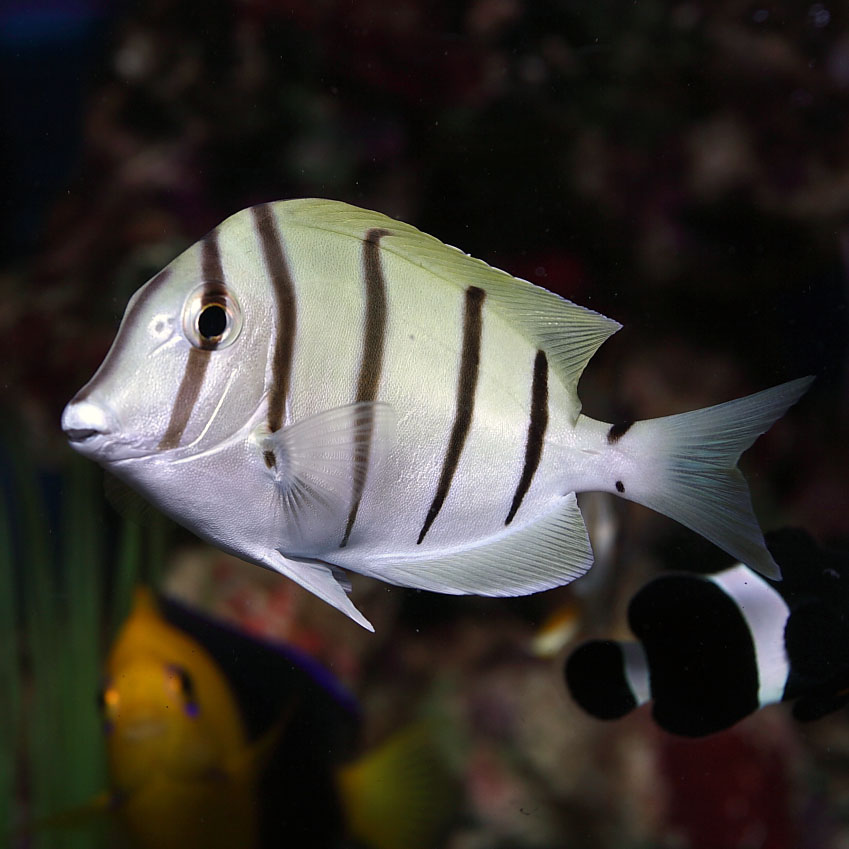
The Convict Tang (Acanthurus triostegus), commonly known as the convict surgeonfish, convict surgeon, or fiveband surgeonfish, is a species of marine ray-finned fish belonging to the family Acanthuridae. It was first formally described in 1758 as Chaetodon triostegus by Carl Linnaeus. The specific name triostegus means ‘three covers’, possibly referring to the three branchiostegal membranes.
Physical Description
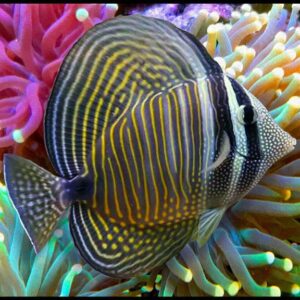
The Convict Tang is so called because of its bold black stripes on a yellowish background. It is a laterally-compressed oval-shaped fish with a maximum length of about 26-27 cm (10-11 in). The head is small with a pointed snout and a terminal mouth with thick lips. It has six black stripes which distinguishes it from the zebra tang which has nine. The first black stripe is oblique and passes through the eye. There are two black spots on the caudal peduncle, and on each side there is a sharp, retractable spine used in offence or defence.
Distribution and Habitat
The Convict Tang occurs in the tropical Indo-Pacific region. Its range extends from the East African coast and Madagascar to southwestern Japan, Australia and Central America, including many Pacific island groups. It is found over hard bottoms in lagoons, reef slopes, bays and estuaries. Juveniles are common in tide pools, and larger fish are found at depths down to about 90 m.
Diet and Feeding
The Convict Tang frequently feeds in the vicinity of freshwater discharges, grazing filamentous algae off the rocks. Typically these tangs graze on filamentous algae growing on coral or rocky substrates. The adults aggregate in large schools to feed and these overwhelm damselfishes attempting to defend their territories.
Aquarium Care
The Convict Tang requires a well-established aquarium of at least 100 gallons with abundant live rock for grazing. It is generally peaceful and can be kept in groups. Generally considered reef-safe.
Conservation Status
Classified as Least Concern by the IUCN Red List.
Reviews
There are no reviews yet.