
| Parameter | Value |
|---|---|
| Diet | Herbivore |
| dKH | 8-12 |
| Maximum Size | 38 cm (15 in) |
| Minimum Tank Size | 200 gallons (757 L) |
| pH | 8.1-8.4 |
| Temperament | Aggressive |
| Temperature | 72-82 F (22-28 C) |
| Weight | Approximately 900 g (2 lbs) at maximum size |
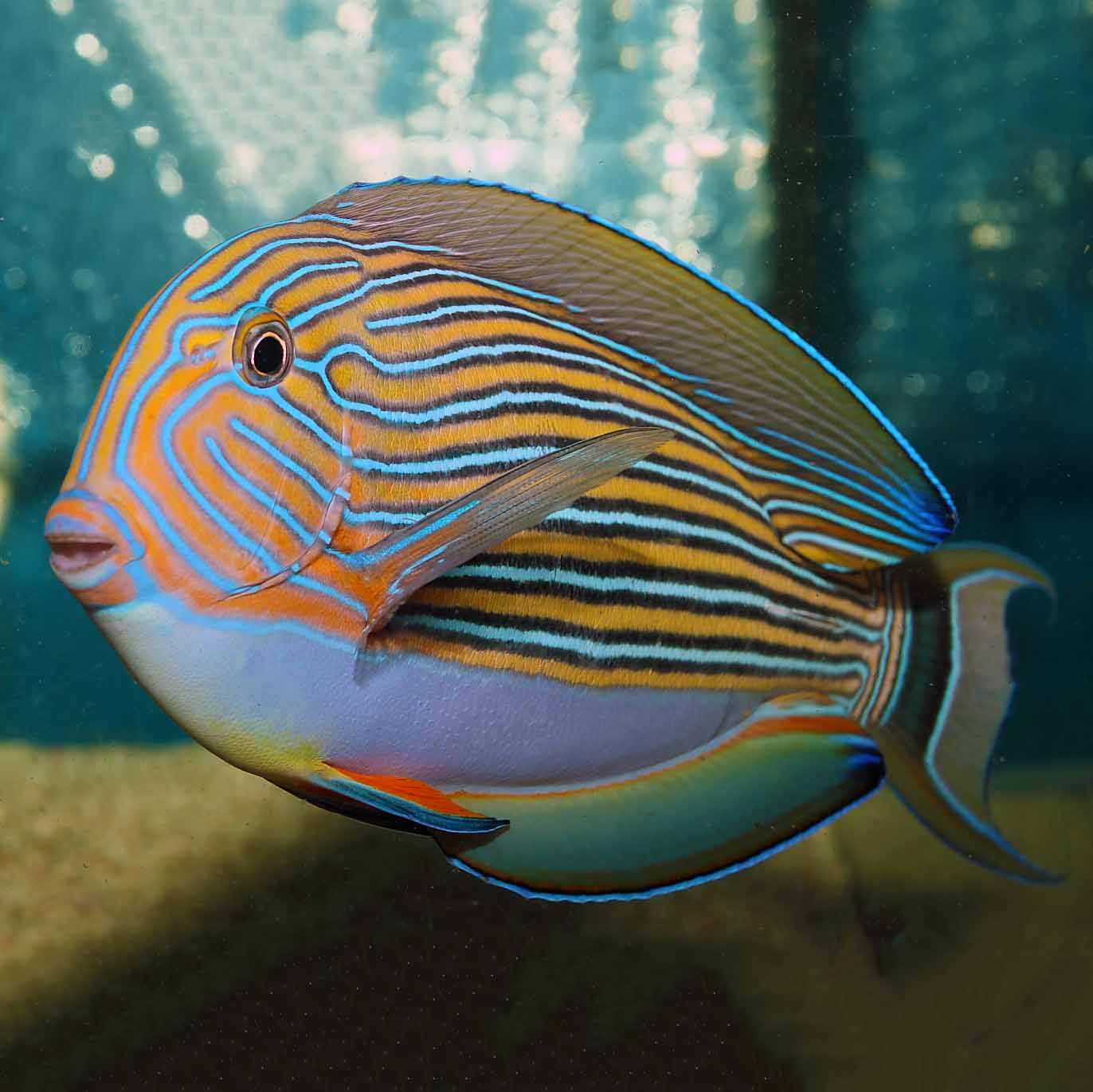
The Clown Tang (Acanthurus lineatus), also known as the lined surgeonfish, blue banded surgeonfish, clown surgeonfish, pyjama tang, striped surgeonfish, or zebra surgeonfish, is a species of marine ray-finned fish belonging to the family Acanthuridae. It was first formally described as Chaetodon lineatus by Linnaeus in 1758. The specific name lineatus means ‘lined’, a reference to the yellow and black lines on the body.
Physical Description
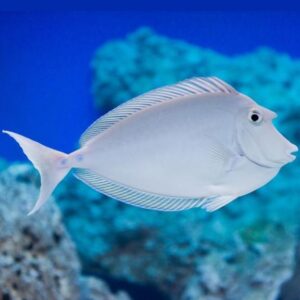
The Clown Tang reaches about 38 cm in length. Much of the body has black-edged blue and yellow stripes, and the top of the head is striped with yellow. The belly is grayish. The pectoral fins have darkened rays and the pelvic fins are yellow-brown with black margins. Like other surgeonfish, it possesses a sharp spine on either side of the tail base, but unlike in other surgeonfish, the spines are venomous and capable of inflicting painful wounds on handlers.
Distribution and Habitat
The Clown Tang occurs in the Indian Ocean from East Africa to the western Pacific Ocean to the Great Barrier Reef, Japan, Polynesia, and Hawaii. It is associated with reefs, living in marine waters just a few meters deep. It is benthopelagic.
Diet and Feeding
The Clown Tang is mostly herbivorous, but might eat crustaceans at times. Most of its diet is algae. It grazes during the day. The fish is territorial, with a large male defending a feeding territory and a harem of females.
Aquarium Care
The Clown Tang requires a very large aquarium of at least 200 gallons with excellent water quality and strong water flow. It is aggressive and territorial, particularly toward other tangs. Generally considered reef-safe but may nip at some corals. Requires a varied diet including marine algae and spirulina.
Conservation Status
Classified as Least Concern by the IUCN Red List.
Reviews
There are no reviews yet.