
| Parameter | Value |
|---|---|
| Diet | Omnivore |
| dKH | 8-12 |
| Maximum Size | 10 cm (3.9 in) |
| Minimum Tank Size | 30 gallons (114 L) |
| pH | 8.1-8.4 |
| Temperament | Semi-aggressive |
| Temperature | 72-82 F (22-28 C) |
| Weight | Approximately 30 g (1.1 oz) at maximum size |
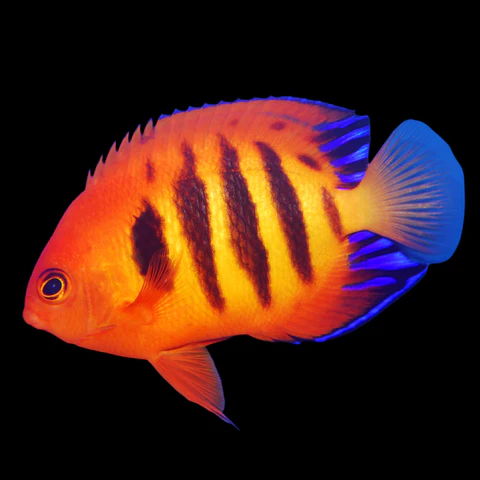
The Flame Angelfish (Centropyge loricula), also known as the Flame Angel or Flaming Angelfish, is a marine angelfish of the family Pomacanthidae found in tropical waters of the Pacific Ocean. It was first formally described in 1874 by the German-born British ichthyologist Albert Gunther. The Flame Angelfish
Distribution and Habitat
is found in various reefs of Oceania, being most common in the Marshall, Line, and Cook Islands. It is less commonly found in the Hawaiian Islands. Specimens from the Marquesas lack the vertical black bars typical of the species. This fish can be found on the foreslope of coral reefs and in clear lagoons. The Flame Angelfish
Physical Description
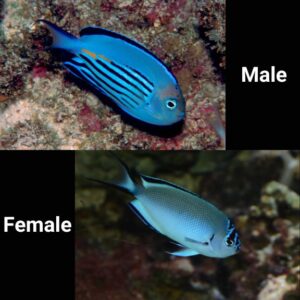
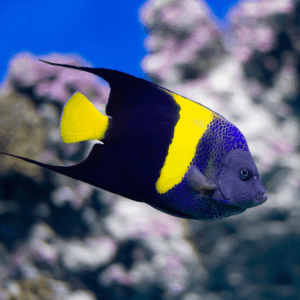
coloration is a vivid bright orange-red with a vertical elongated black spot mid-body and four or five bars on the sides, with alternating short purple-blue and black bands. Males are generally larger and slightly more colorful than females. The lifespan of the Flame Angelfish is 5-7 years or more.
Diet and Feeding
In the wild, the Flame Angelfish has a varied diet artistic of algae and crustaceans.
Aquarium Care
In captivity, this species feeds on a variety of foods including brine shrimp, mysis shrimp, other meaty foods, spirulina, seaweed sheets, and pellets. The Flame Angelfish is known to be shy upon introduction to an established aquarium, especially as smaller specimens, but within a week it typically gains confidence and is then constantly seen grazing around live rock during the day. The Flame Angelfish is
Behavior and Reproduction
haremic in the wild and can be kept in pairs or trios in an extra-large aquarium. The fish are broadcast spawners, releasing eggs and sperm simultaneously at dusk. The Flame Angelfish has been known to spawn in captivity, with captive-bred specimens available. The Flame Angelfish is often considered reef-safe, as it will adapt to a captive diet quickly.
Conservation Status
Classified as Least Concern by the IUCN Red List.
Reviews
There are no reviews yet.