
| Parameter | Value |
|---|---|
| Diet | Herbivore |
| dKH | 8-12 |
| Maximum Size | 30 cm (11.8 in) |
| Minimum Tank Size | 125 gallons (473 L) |
| pH | 8.1-8.4 |
| Temperament | Semi-aggressive |
| Temperature | 72-82 F (22-28 C) |
| Weight | Approximately 500 g (1.1 lbs) at maximum size |
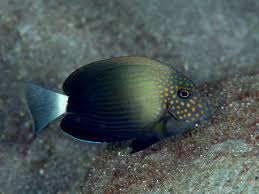
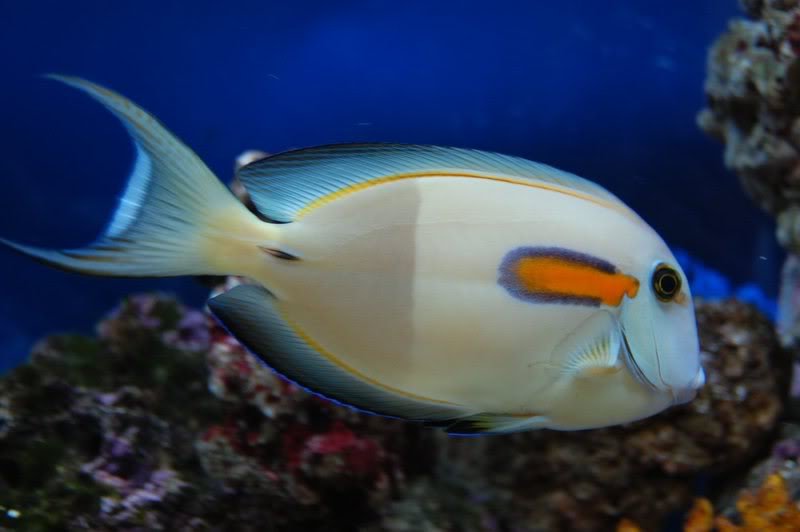
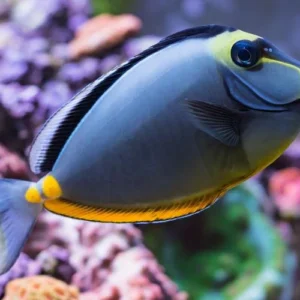
The Black-Eared Tang (Acanthurus maculiceps), also known as the white-cheeked surgeonfish or masked surgeonfish, is a species of marine ray-finned fish belonging to the family Acanthuridae. It is found in the Indo-Pacific region and is popular in the marine aquarium trade.
Physical Description
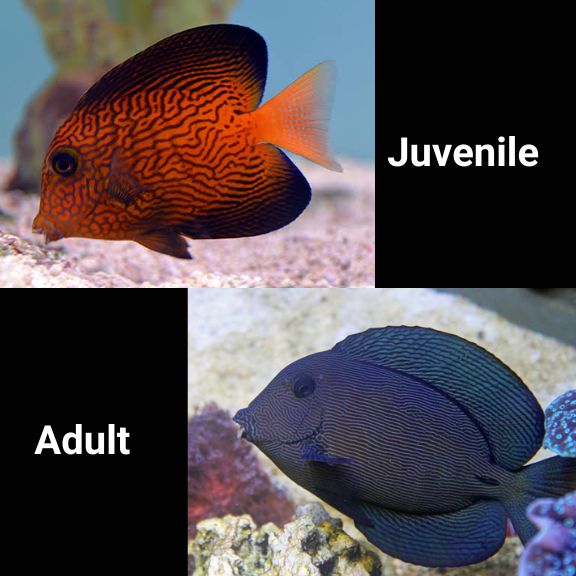
The Black-Eared Tang has an oval-shaped, laterally compressed body. The overall coloration is dark brown to black with a distinctive black patch or ‘ear’ mark behind the eye, which gives this species its common name. The dorsal fin has 9 spines and 24-27 soft rays while the anal fin has 3 spines and 22-24 soft rays. There are fine horizontal stripes on the body. This species reaches a maximum total length of approximately 30 cm (11.8 in).
Distribution and Habitat
The Black-Eared Tang is found in the Western Pacific Ocean, from Indonesia and the Philippines to southern Japan and the Great Barrier Reef. It inhabits shallow coral reefs and lagoons, typically at depths between 2 and 20 meters.
Diet and Feeding
The Black-Eared Tang is primarily herbivorous, grazing on benthic algae and filamentous algae. In captivity, it should be offered a varied diet including marine algae, spirulina, and high-quality vegetable-based preparations.
Aquarium Care
The Black-Eared Tang requires a large aquarium of at least 125 gallons with abundant live rock for grazing and hiding. It is semi-aggressive and may display territorial behavior toward other tangs, particularly those of similar body shape. Generally considered reef-safe.
Conservation Status
Classified as Least Concern by the IUCN Red List.
Reviews
There are no reviews yet.