
| Parameter | Value |
|---|---|
| Diet | Carnivore |
| dKH | 8-12 |
| Maximum Size | 20 cm (7.9 in) |
| Minimum Tank Size | 30 gallons (114 L) |
| pH | 8.1-8.4 |
| Temperament | Semi-aggressive |
| Temperature | 72-82 F (22-28 C) |
| Weight | Approximately 30 g (1.1 oz) |
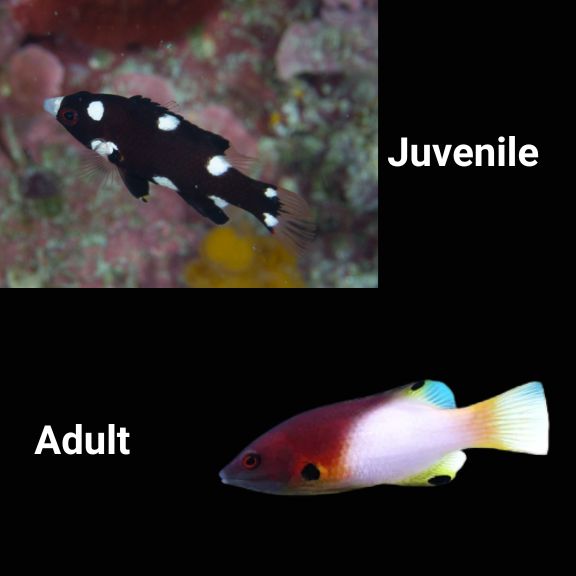
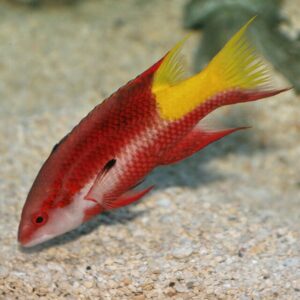
The Bicolor Hogfish (Bodianus axillaris), also known as the Axilspot Hogfish or Coral Pigfish, is a species of wrasse native to the Indo-Pacific.
Distribution and Habitat
The Bicolor Hogfish is found in the Indo-Pacific from the Red Sea to South Africa, Marshall Islands, Marquesan, and Tuamoto Islands, north to Japan. The adults are found in clear lagoons and along seaward reefs where they are common in clear shallow waters at depths of 1 to 8 meters. Larger fish are occasionally found in deeper water below 27 meters.
Physical Description
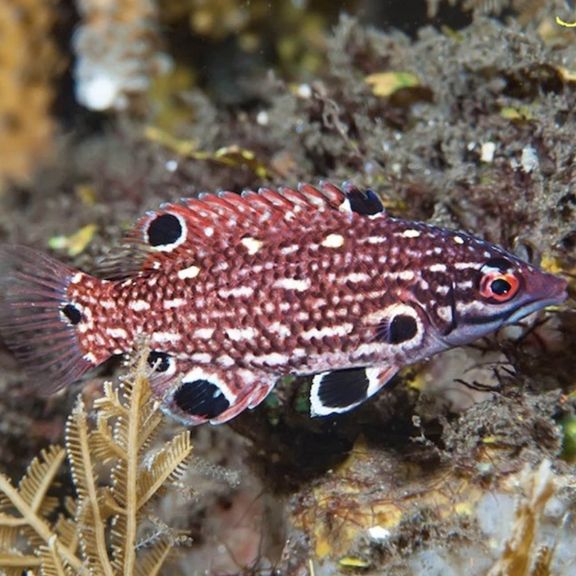
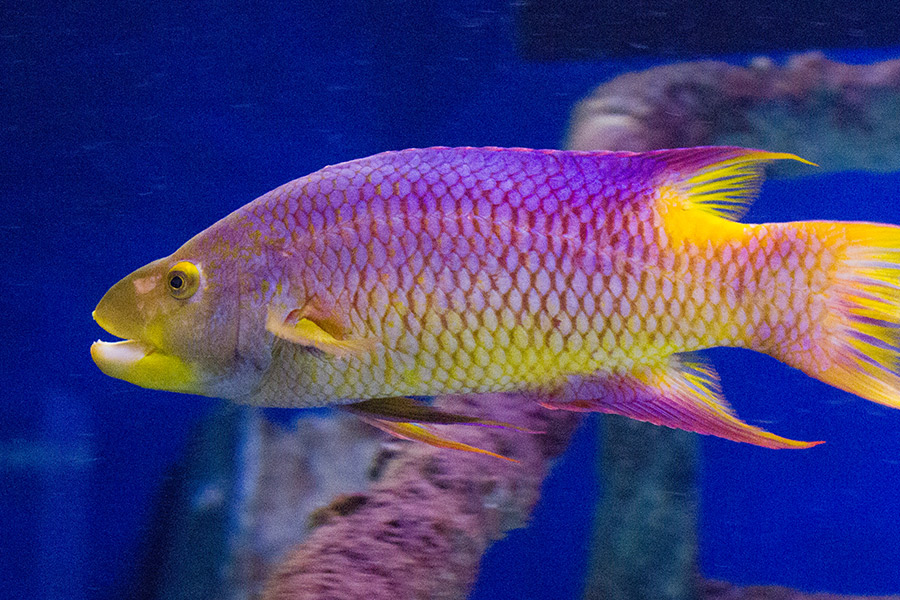
The Bicolor Hogfish is sexually dimorphic. Adult males are coloured reddish-brown on the front part of their bodies contrasting with the white posterior end and having a sizeable black spot at the base of the pectoral fin as well as on the dorsal and anal fins. Females and juveniles are a blackish colour marked with white blotches along the upper and lower flanks. It grows to a standard length of 20 cm (7.9 in).
Diet and Feeding
Their diet is made up of benthic hard-shelled invertebrates such as molluscs and crustaceans. In captivity it should be fed a variety of meaty foods including shrimp, crab, and prepared foods.
Behavior and Reproduction
The juveniles are found singly in caves or under overhangs where they behave as cleaner fish. Adults will sometimes behave in this way too. It is oviparous and the males and females form distinct pairs when spawning.
Aquarium Care
It requires a tank of at least 30 gallons with plenty of live rock and hiding spots. It is semi-aggressive and should be kept with similarly sized or larger tankmates. It may eat small invertebrates and should not be housed with very small peaceful species. It is infrequently encountered in the aquarium trade.
Conservation Status
Classified as Least Concern by the IUCN Red List.
Reviews
There are no reviews yet.