
| Parameter | Value |
|---|---|
| Scientific Name | Rhinopias frondosa |
| Conservation Status | Least Concern |
| Diet | Carnivore |
| Maximum Size | 23 cm |
| Temperament | Semi-aggressive |
| Reef Safe | With caution |
| Origin | Indo-Pacific |
| Temperature | 72-78°F |
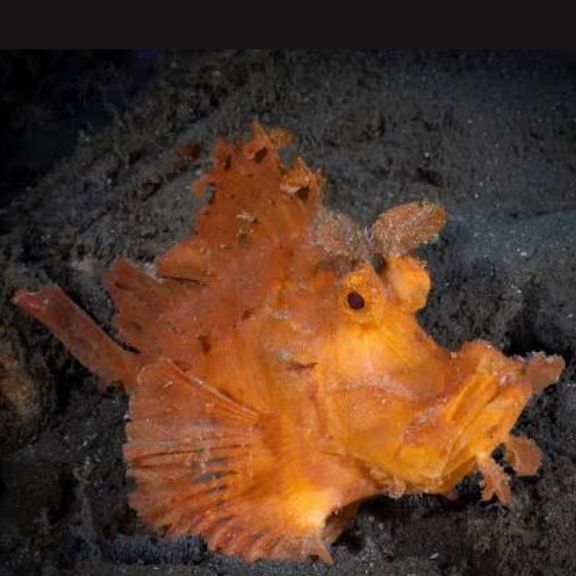
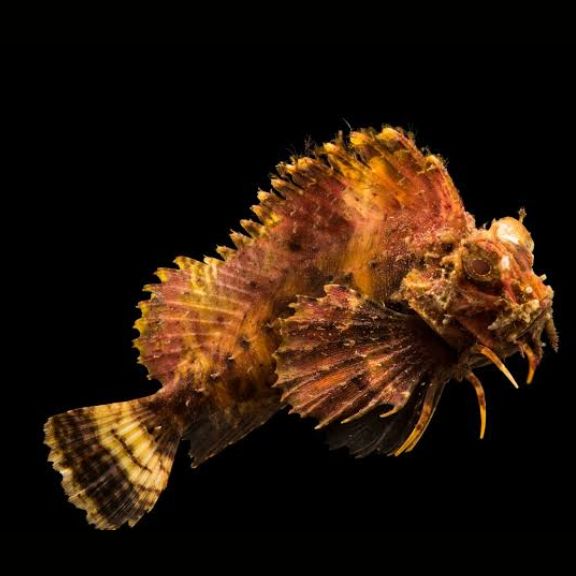
The Rhinopias Scorpionfish (Rhinopias frondosa), widely known as the Weedy Scorpionfish, is an extraordinary and rare marine scorpaenid belonging to the family Scorpaenidae. Highly coveted by marine enthusiasts for its otherworldly silhouette and elaborate weed-like appendages, this spectacular fish represents the pinnacle of natural camouflage.
Distribution and Habitat
The Rhinopias Scorpionfish is native to the tropical and subtropical waters of the Indo-West Pacific, ranging from East Africa, Mauritius, and the Seychelles to southern Japan, the Philippines, Indonesia, and northern Australia. It frequents rocky reef slopes, soft-bottom rubble areas, macroalgae beds, and sponge gardens at depths from 10 to 90 meters, often found in regions with gentle to moderate currents.
Physical Description
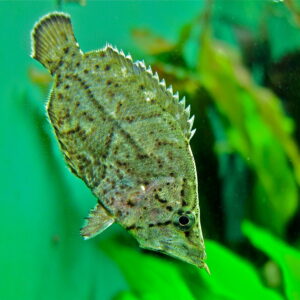
The Rhinopias Scorpionfish grows to a maximum length of 23 cm (9 inches). Its body is highly compressed laterally with an elevated, upturned snout and prominent high-set eyes. The entire body, head, and fin margins are adorned with elaborate, weed-like dermal flaps, fronds, and tentacles. Coloration is exceptionally variable, ranging from vivid purple, lavender, and magenta to bright yellow, crimson, olive-green, and mottled brown, often accented with circular rings or ocellated spots. Like other scorpionfishes, its dorsal spines carry potent venom for defense, and it regularly sheds its outer epidermal layer.
Diet and Feeding
This species is an apex ambush predator specializing in live marine fishes and mobile crustaceans. It perches silently among sponges and algae, virtually indistinguishable from surrounding debris, until an unwary prey approaches. With lightning speed, it expands its enormous buccal cavity to create suction that draws prey into its maw. In the aquarium, it should be offered live ghost shrimp or small feeder fish initially, before being transitioned onto frozen silversides, lancefish, and raw prawn using feeding tongs.
Behavior and Reproduction
Sedentary and docile, the Rhinopias Scorpionfish rarely swims in the open water. Instead, it crawls across the substrate using its flexible, leg-like pectoral and pelvic fins in a deliberate, rocking gait. During courtship, pairs ascend slightly into the water column during twilight hours to spawn, producing a floating gelatinous mass of eggs that drifts with ocean currents.
Aquarium Care
An aquarium of at least 50 to 75 gallons is recommended, furnished with stable live rock formations, open sand or rubble patches, and low-to-moderate current. Aquarists must take great care when performing maintenance to avoid accidental contact with its venomous spines. It is safe with corals, but will readily ingest any ornamental shrimp, crab, or fish small enough to swallow. Tankmates should be calm, peaceful species that will not nip at its delicate dermal fronds.
Conservation Status
Classified as Least Concern by the IUCN Red List. Although naturally uncommon in localized reef surveys, it possesses a broad Indo-Pacific range and faces no immediate widespread population threats.
Reviews
There are no reviews yet.