

| Parameter | Value |
|---|---|
| Lighting | Moderate |
| Water Flow | Low |
| Care Level | Moderate |
| Temperament | Peaceful |
| Placement | Sand bed |
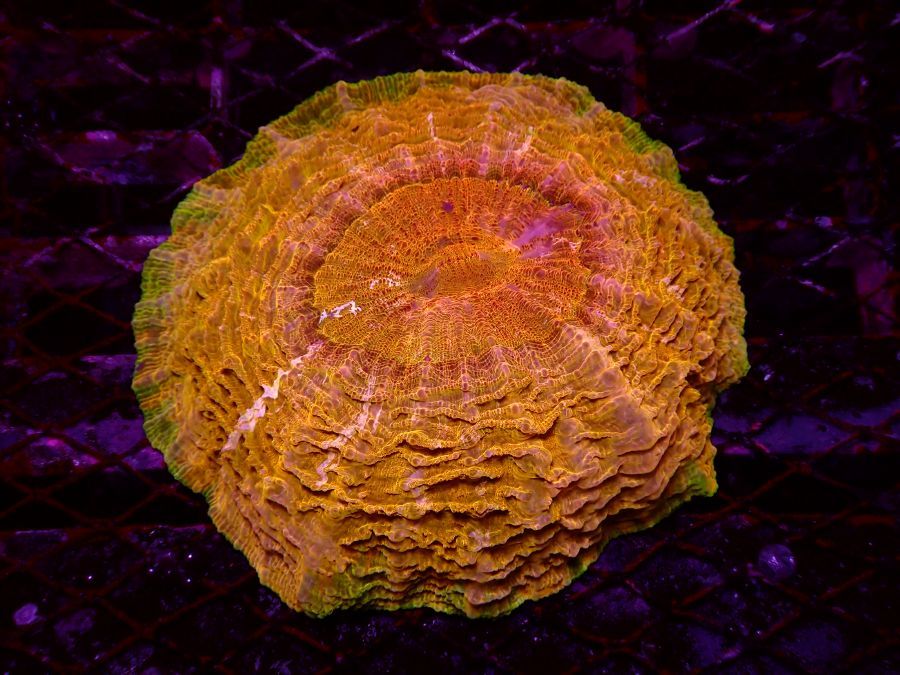
The Meat Coral is an imposing and resilient solitary LPS coral scientifically identified as Acanthophyllia deshayesiana. It is celebrated for its thick, fleshy mantle and unique sculptural folds that give it its distinctive common name. It serves as an impressive sand-dwelling centerpiece in dedicated reef aquariums.
Distribution and Habitat
Native to the tropical Indo-Pacific, this species settles on quiet lagoon floors and deeper reef edges. It is frequently discovered on silt, mud, and sand substrates protected from strong oceanic swells. Such calm settings prevent disruption to its substantial fleshy polyp structure.
Physical Description
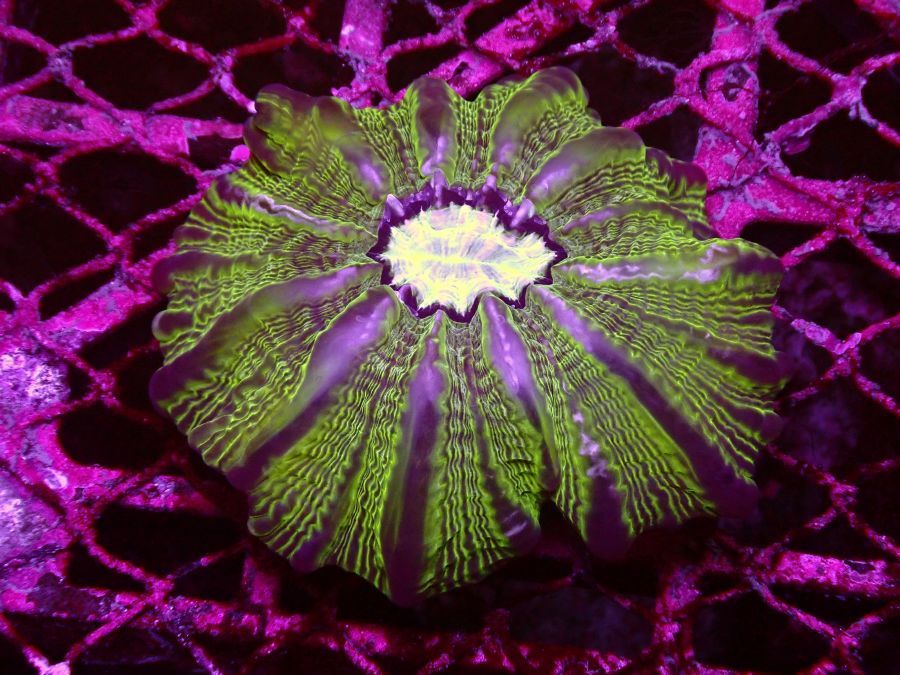
The coral exhibits extremely thick, fleshy tissue layered in intricate folds over a heavy cup-shaped skeleton. Its coloration ranges across rich shades of red, brown, green, and orange with a subtle velvety texture. When fully inflated, its diameter can expand several times larger than its skeletal base.
Diet and Feeding
It derives vital metabolic nutrition from the photosynthetic action of internal zooxanthellae algae. To maintain its thick tissue bulk, it requires regular direct feedings of chopped shrimp, clam meat, and LPS pellets. Target feeding once or twice per week ensures optimal inflation and health.
Behavior and Reproduction
It has a peaceful nature and poses no threat to adjacent coral specimens when provided adequate physical space. Natural reproduction occurs via mass broadcast spawning into open waters. It remains solitary throughout its lifespan and does not form multiple branches or heads.
Aquarium Care
Always place this specimen on a soft sand bed away from jagged rocks that could lacerate expanding tissue. Moderate lighting combined with low laminar water flow provides the ideal physical environment. Regular testing of calcium, alkalinity, and magnesium maintains structural integrity.
Conservation Status
Protected by sustainable fisheries management and international trade monitoring across its range. Wild populations continue to thrive in deep and sheltered marine waters. Classified as Least Concern by the IUCN Red List.


Reviews
There are no reviews yet.