
| Parameter | Value |
|---|---|
| Scientific Name | Holocentrus sp. |
| Conservation Status | Least Concern |
| Diet | Carnivore |
| Maximum Size | 45 cm (18 in) |
| Temperament | Semi-aggressive |
| Reef Safe | With caution |
| Origin | Western Atlantic |
| Temperature | 72-78 F (22-26 C) |
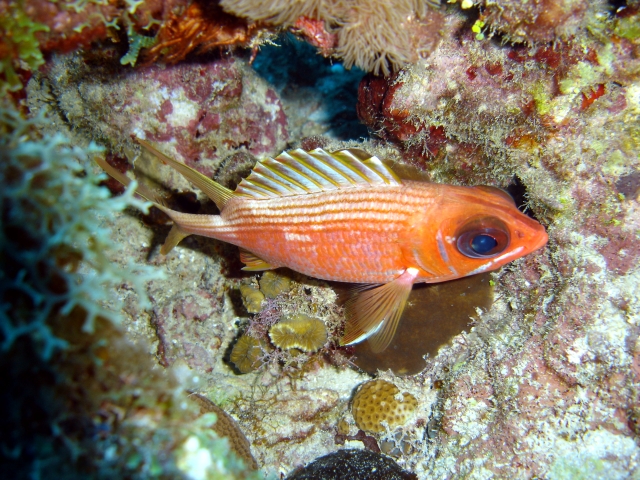
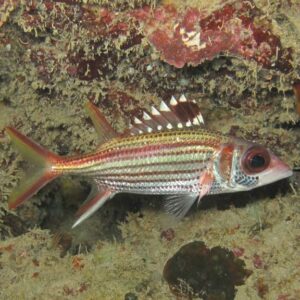
The Longspine Squirrelfish (Holocentrus sp.) is a boldly armed nocturnal fish of the family Holocentridae, found in the western Atlantic and Caribbean. It is unmistakable thanks to its elongated venomous dorsal spines and bright red body. It is best kept in larger tanks with robust tankmates.
Distribution and Habitat
The Longspine Squirrelfish occurs across the western Atlantic and Caribbean from Florida and the Gulf of Mexico through the Bahamas to Central and South America. It inhabits coral reefs, rocky ledges, and shipwrecks at depths of 1 to 50 meters.
Physical Description
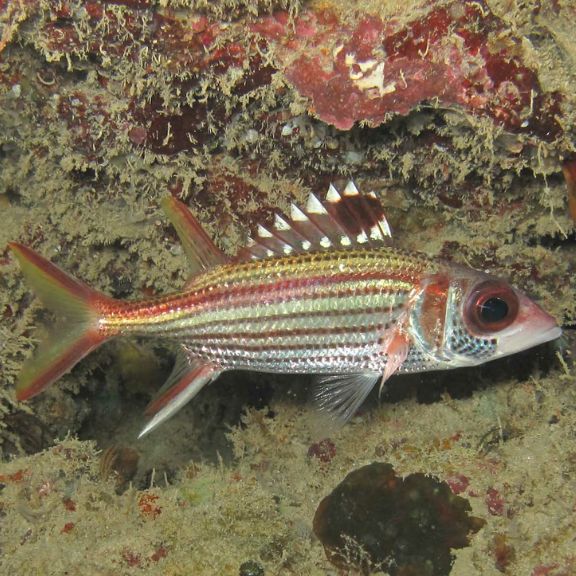
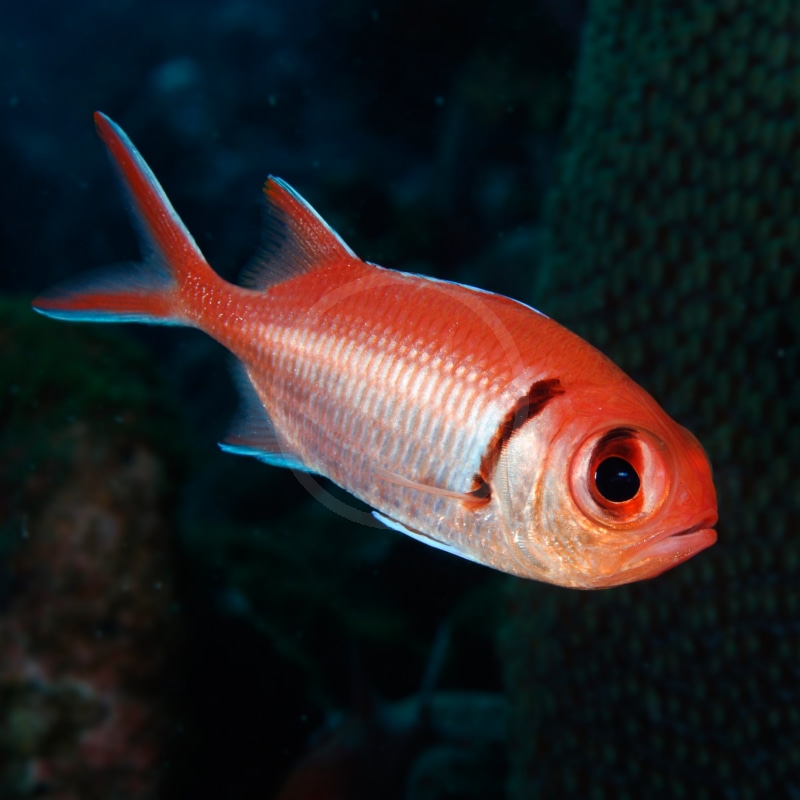
The Longspine Squirrelfish has a moderately deep compressed body crowned by an impressive dorsal fin of long sharp spines. Its colour is a vivid red with thin silvery lines along the flanks and a silvery underside. It reaches 45 cm (18 inches). Its spines bear venomous tissue.
Diet and Feeding
The Longspine Squirrelfish is an opportunistic carnivore that feeds on small fish and crustaceans. It hunts at night using its large eyes to locate prey. In captivity it accepts frozen fish, shrimp, and prepared carnivore foods fed after lights-out.
Behavior and Reproduction
The Longspine Squirrelfish is nocturnal and hides in caves by day, venturing out at dusk to hunt. It is a confident agile swimmer that becomes territorial as it matures. Given secure daytime retreats it settles well.
Aquarium Care
The Longspine Squirrelfish requires at least 100 gallons (379 L) with numerous caves and overhangs. Water temperature should be 72-78 F (22-26 C). It is reef safe with caution, as it may eat small fish. It should be fed at night.
Conservation Status
Classified as Least Concern by the IUCN Red List.
Reviews
There are no reviews yet.