
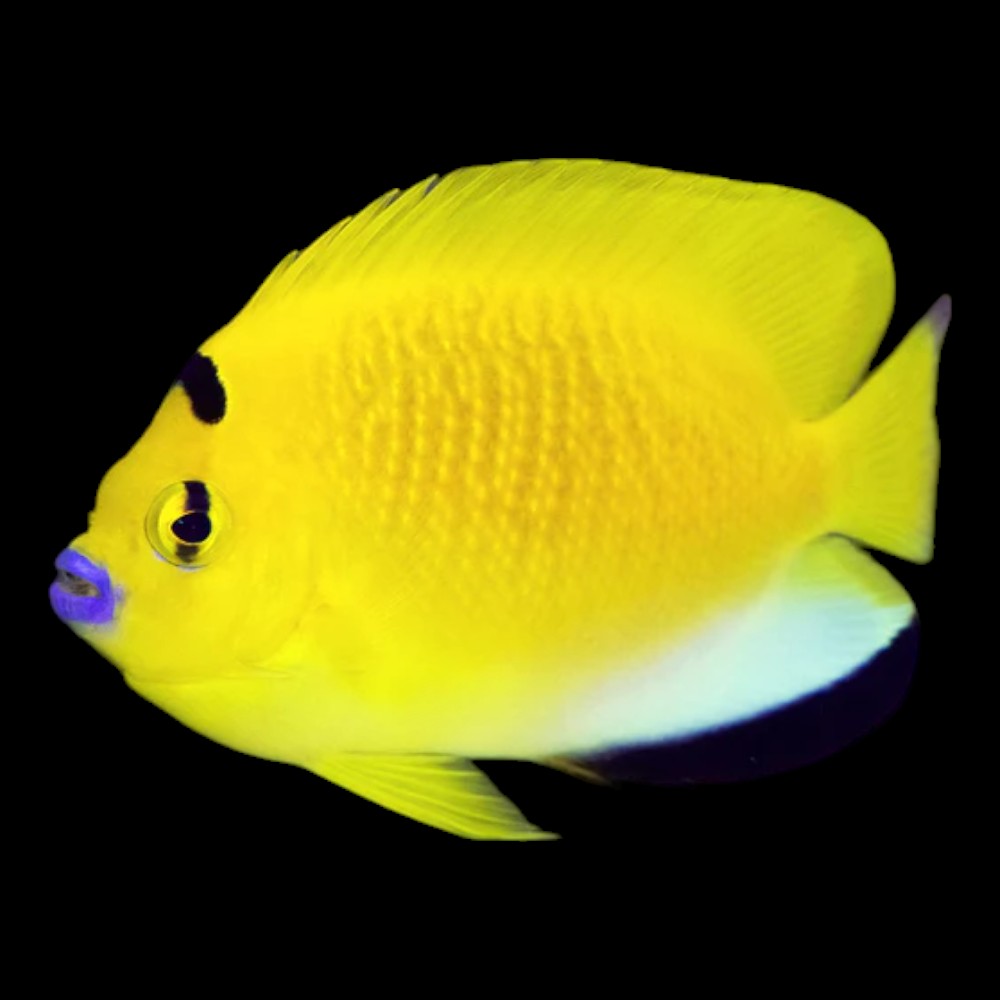
| Parameter | Value |
|---|---|
| Diet | Omnivore |
| dKH | 8-12 |
| Maximum Size | 26 cm (10.2 in) |
| Minimum Tank Size | 100 gallons (379 L) |
| pH | 8.1-8.4 |
| Temperament | Semi-aggressive |
| Temperature | 72-82 F (22-28 C) |
| Weight | Approximately 300 g (10.6 oz) at maximum size |
The Flagfin Angelfish (Apolemichthys trimaculatus), also known as the Threespot Angelfish, is a demersal marine angelfish belonging to the family Pomacanthidae. It was first formally described in 1831 by the French anatomist Georges Cuvier. The species is
Distribution and Habitat
widely distributed throughout the tropical waters of the Indian and western Pacific Oceans. The Flagfin Angelfish is distributed from the coast of East Africa between Tanzania and Mozambique to the western Pacific Ocean. It is found at depths of 10 to 80 meters, living on outer coral reef slopes and drop-offs.
Physical Description
Juveniles are more secretive and solitary than adults and typically remain deeper than 25 meters. The Flagfin Angelfish is a bright yellow species with blue lips, a wide black margin to the anal fin, a black spot on the forehead, and a faint spot just behind the operculum. Juveniles lack the spots and instead have a thin black band running vertically through the eye, as well as vertical golden bars on the flanks. The dorsal fin contains 14 spines and 16-18 soft rays while the anal fin has 3 spines and 17-19 soft rays. This species attains a maximum total length of 26 cm (10.2 in). The Flagfin Angelfish
Diet and Feeding
feeds mainly on benthic invertebrates, particularly sponges and tunicates, though crustaceans are also taken. Adults
Behavior and Reproduction
are normally encountered in small, loosely organized groups consisting of one male and 2-7 females, with males being territorial. This species is diurnal and a protogynous hermaphrodite.
Aquarium Care
The Flagfin Angelfish requires a tank of at least 100 gallons with stable water conditions and abundant live rock. Not considered reef-safe.
Conservation Status
Classified as Least Concern by the IUCN Red List.
Reviews
There are no reviews yet.