
| Parameter | Value |
|---|---|
| Diet | Omnivore |
| dKH | 8-12 |
| Maximum Size | 23 cm (9 in) |
| Minimum Tank Size | 70 gallons (265 L) |
| pH | 8.1-8.4 |
| Temperament | Peaceful |
| Temperature | 72-82 F (22-28 C) |
| Weight | Approximately 150 g (5.3 oz) at maximum size |
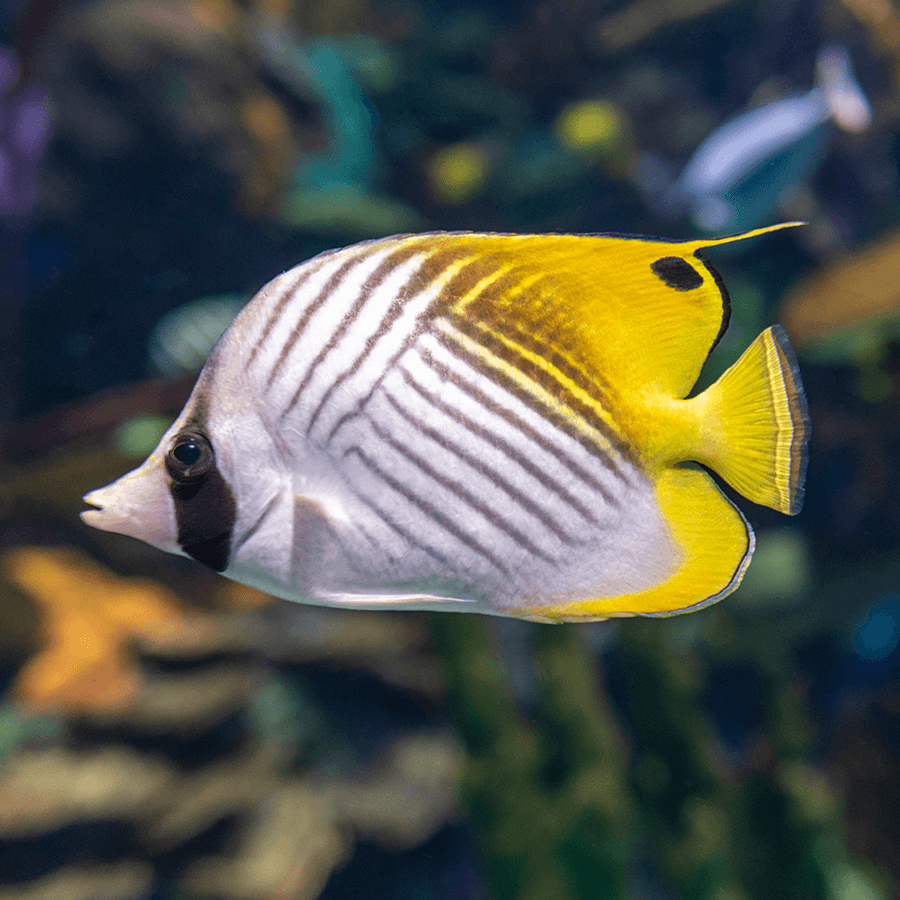
The Auriga Butterflyfish (Chaetodon auriga), also known as the Threadfin Butterflyfish, is a species of butterflyfish found in the Indo-Pacific region. It was first formally described in 1775 by the Swedish naturalist Peter Forsskal.
Distribution and Habitat
The Auriga Butterflyfish is found in the Indo-Pacific region from the Red Sea and eastern Africa south to Mossel Bay, South Africa, to the Hawaiian, Marquesas and Ducie islands, north to southern Japan, and south to Lord Howe Island and Rapa Iti. It occurs at depths of 1 to 35 meters.
Physical Description
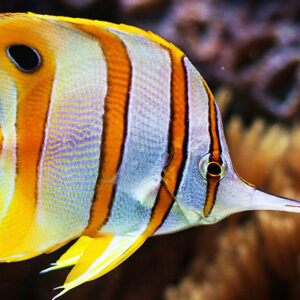
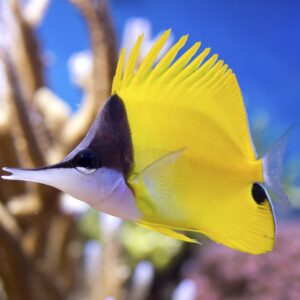
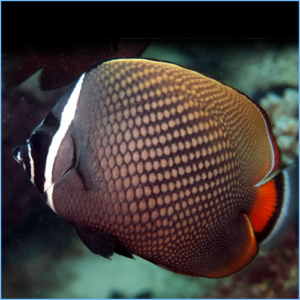
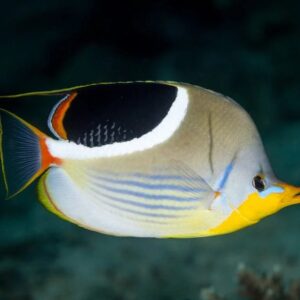
The Auriga Butterflyfish can reach up to 23 cm (9 in) in length. Its body is white with chevron markings on the sides. The rear edge of the dorsal fin has a prominent black spot with a trailing filament behind it. A black vertical band runs through the eye. The fish also has a belly patch of descending oblique dark lines and bright yellow fins. Two subspecies are sometimes recognized: the Red Sea form lacks the dorsal eyespot, while the population outside the Red Sea has it.
Diet and Feeding
The Auriga Butterflyfish feeds on a variety of benthic invertebrates, algae, and coral polyps. In captivity, it accepts a varied diet including mysis shrimp, brine shrimp, frozen preparations, and marine algae.
Behavior and Reproduction
This species is typically found in pairs or small groups. It is an oviparous species that forms pairs for breeding. Pelagic eggs are scattered in open water.
Aquarium Care
The Auriga Butterflyfish requires a tank of at least 70 gallons with abundant live rock for grazing and hiding. It is generally peaceful and can be kept with a variety of tankmates. It may nip at corals, so it is not universally considered reef-safe. Multiple small feedings per day are recommended.
Conservation Status
Classified as Least Concern by the IUCN Red List.

Reviews
There are no reviews yet.