

| Parameter | Value |
|---|---|
| Lighting | Moderate |
| Water Flow | Low |
| Care Level | Moderate |
| Temperament | Peaceful |
| Placement | Sand bed |
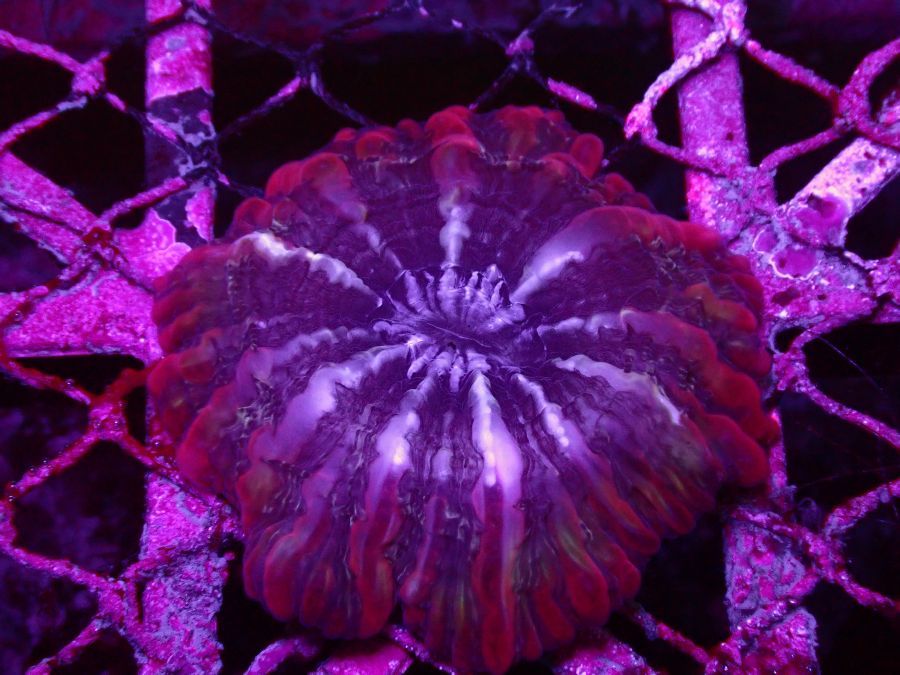
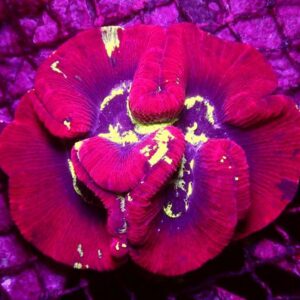
The Tiger Stripe Doughnut Australian Coral is an extraordinary solitary LPS specimen known scientifically as Acanthophyllia deshayesiana. It is famed for its immense polyp size and striking radial stripes resembling a tiger pattern. It is widely regarded as one of the most prestigious showpiece corals in the reef-keeping hobby.
Distribution and Habitat
This coral is found in the Indo-Pacific region, particularly around northern and western Australian reef systems. It inhabits calm reef bottoms, soft sand plains, and protected lagoon slopes at moderate depths. In these peaceful waters, it rests comfortably on muddy and sandy ocean floors.
Physical Description
It features a massive solitary skeletal base enveloped by an enormous, doughnut-shaped fleshy mantle. The tissue is patterned with bold alternating bands of green, red, and metallic grey radiating from the central mouth. At night, strong feeder tentacles expand to trap larger food items.
Diet and Feeding
Symbiotic zooxanthellae within its tissue generate essential carbohydrates through natural light absorption. It possesses a voracious appetite and benefits substantially from direct target feedings of mysis shrimp, krill, and meaty marine pellets. Regular feedings twice a week sustain its remarkable tissue mass.
Behavior and Reproduction
It is a peaceful coral that does not attack neighboring species with aggressive stinging tentacles. In the ocean, it reproduces via broadcast spawning events during synchronized seasonal cycles. In home aquariums, it remains a solitary polyp and does not divide mechanically.
Aquarium Care
Position this coral on a fine sand bed where its expansive mantle has ample room to inflate without scraping rock surfaces. Moderate lighting and low, gentle water currents are vital to avoid irritating the expanded fleshy tissue. Stable water parameters with adequate calcium support its heavy skeleton.
Conservation Status
Australian collection is strictly regulated under national quotas to ensure environmental sustainability. Wild populations remain secure and healthy across deep offshore reef beds. Classified as Least Concern by the IUCN Red List.


Reviews
There are no reviews yet.