
| Parameter | Value |
|---|---|
| Scientific Name | Choridactylus multibarbus |
| Conservation Status | Least Concern |
| Diet | Carnivore |
| Maximum Size | 15 cm |
| Temperament | Semi-aggressive |
| Reef Safe | With caution |
| Origin | Indo-Pacific |
| Temperature | 72-78°F |
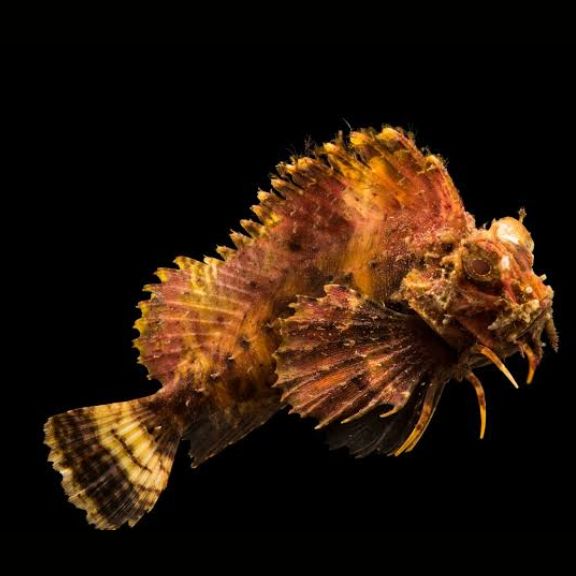
The Orangebanded Stingfish (Choridactylus multibarbus), also known as the Bearded Ghoul or Multibarbed Stingfish, is a cryptic benthic scorpionfish belonging to the family Synanceiidae. Found in shallow coastal waters of the Indo-West Pacific, this unique species possesses modified pectoral fin rays used for walking across soft marine sediments.
Distribution and Habitat
The Orangebanded Stingfish is distributed across the tropical and subtropical waters of the Indo-West Pacific, spanning the Red Sea, the Persian Gulf, India, Sri Lanka, Indonesia, the Philippines, Thailand, and southern China. It inhabits sheltered coastal bays, sandy flats, muddy estuaries, and silt-laden reef bottoms at depths between 2 and 60 meters, often congregating near river mouths and mangrove channels.
Physical Description
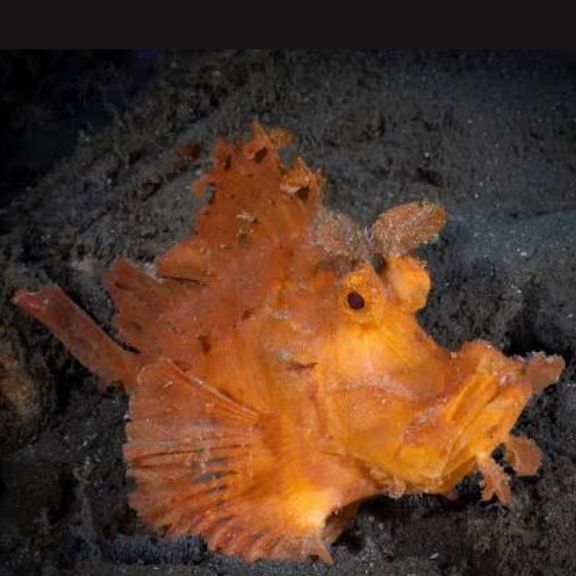
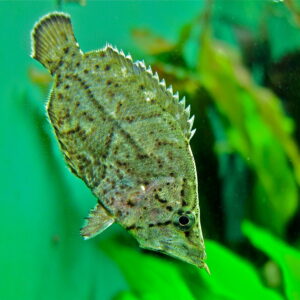
The Orangebanded Stingfish attains a maximum total length of 15 cm (6 inches). It features a robust, knobby body with a mottled greyish-brown to reddish-orange background that mimics mud and coral rubble. The underside and inner margins of its expansive pectoral fins are marked with striking, high-contrast bright orange or golden-yellow bands. The chin is adorned with fleshy barbels, and the lower three rays of each pectoral fin are completely detached and modified into finger-like walking appendages. Its dorsal fin spines contain potent venom capable of delivering a painful sting.
Diet and Feeding
In the wild, the Orangebanded Stingfish is a stealthy carnivore that preys upon small bottom-dwelling crustaceans, benthic shrimp, marine worms, and small fishes. It uses its tactile walking rays to probe the sediment and locate hidden prey, striking instantly with an expansive gulp. In the home aquarium, it prefers meaty offerings such as live ghost shrimp, enriched frozen mysis, chopped squid, krill, and silversides presented directly near the substrate.
Behavior and Reproduction
A primarily nocturnal bottom-dweller, the Orangebanded Stingfish spends daylight hours partially buried in soft silt or sand, exposing only its eyes, nostrils, and chin barbels. It walks methodically across the sea floor using its finger-like rays rather than swimming. When threatened, it flares its large pectoral fins to display its vibrant orange warning bands to deter predators. Spawning behavior occurs pelagically, with floating egg masses dispersing into coastal currents.
Aquarium Care
An aquarium of 40 gallons or larger with a thick bed of fine, soft sand is required to accommodate its natural burying and walking behaviors. Aquarists must exercise extreme caution during routine maintenance due to the venomous dorsal spines. The species is reef safe with caution; it will not harm sessile stony or soft corals, but it will consume small crabs, ornamental shrimp, and tiny bottom fish. Water temperature should be maintained between 72-78°F with stable chemical parameters.
Conservation Status
Classified as Least Concern by the IUCN Red List. It has a broad geographical distribution and stable population numbers across widespread soft-bottom coastal marine habitats.
Reviews
There are no reviews yet.