
| Parameter | Value |
|---|---|
| Diet | Carnivore |
| dKH | 8-12 |
| Maximum Size | 38 cm (15 in) |
| pH | 8.1-8.4 |
| Temperament | Semi-Aggressive |
| Reef Safe | With Caution |
| Origin | Indo-West Pacific |
| Specific Gravity | 1.020-1.025 |
| Temperature | 72-78°F (22-26°C) |
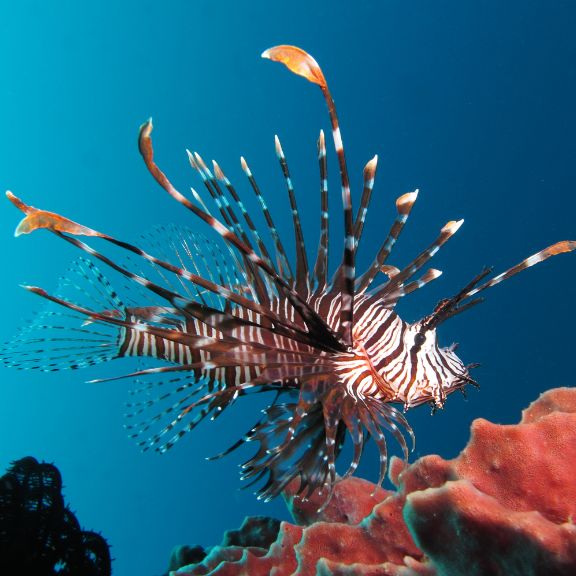
The Red Volitan Lionfish (Pterois volitans), also known as the Red Lionfish or Common Lionfish, is a species of marine ray-finned fish belonging to the family Scorpaenidae. It was first formally described in 1758 by Carl Linnaeus. The specific name volitans means "flying" in reference to the large, wing-like pectoral fins. This species has become notorious as an invasive species in the western Atlantic Ocean and Caribbean Sea.
Distribution and Habitat
The Red Volitan Lionfish is native to the Indo-Pacific from the Red Sea and East Africa to the Society Islands, north to southern Japan and south to northern Australia and New Zealand. It inhabits coral reefs, lagoons, and rocky substrates at depths from 1 to 50 meters. It is found in a wide range of habitats from shallow coastal waters to deeper reef slopes. It has also become established as an invasive species in the western Atlantic Ocean, Caribbean Sea, and Gulf of Mexico.
Physical Description
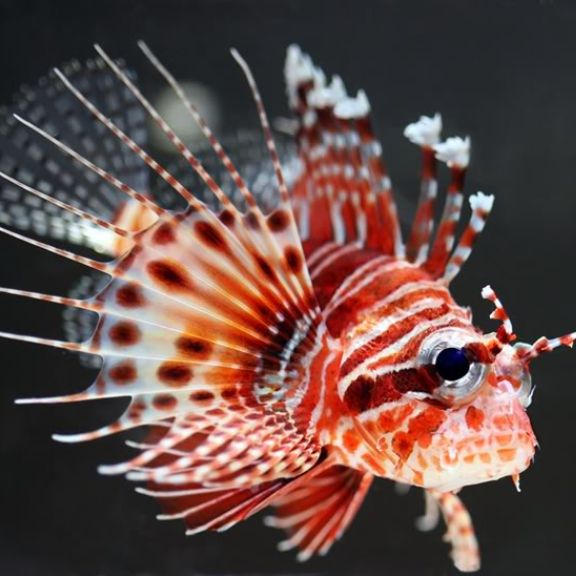
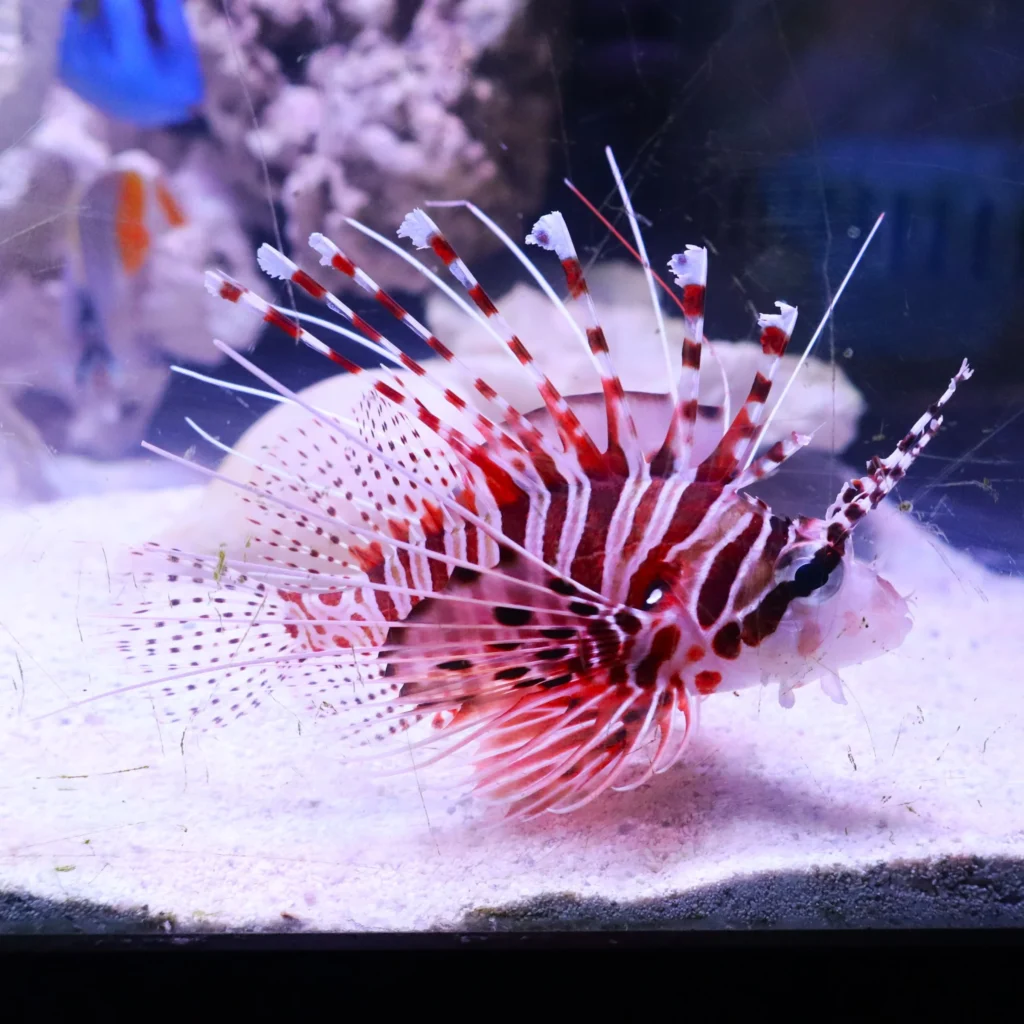
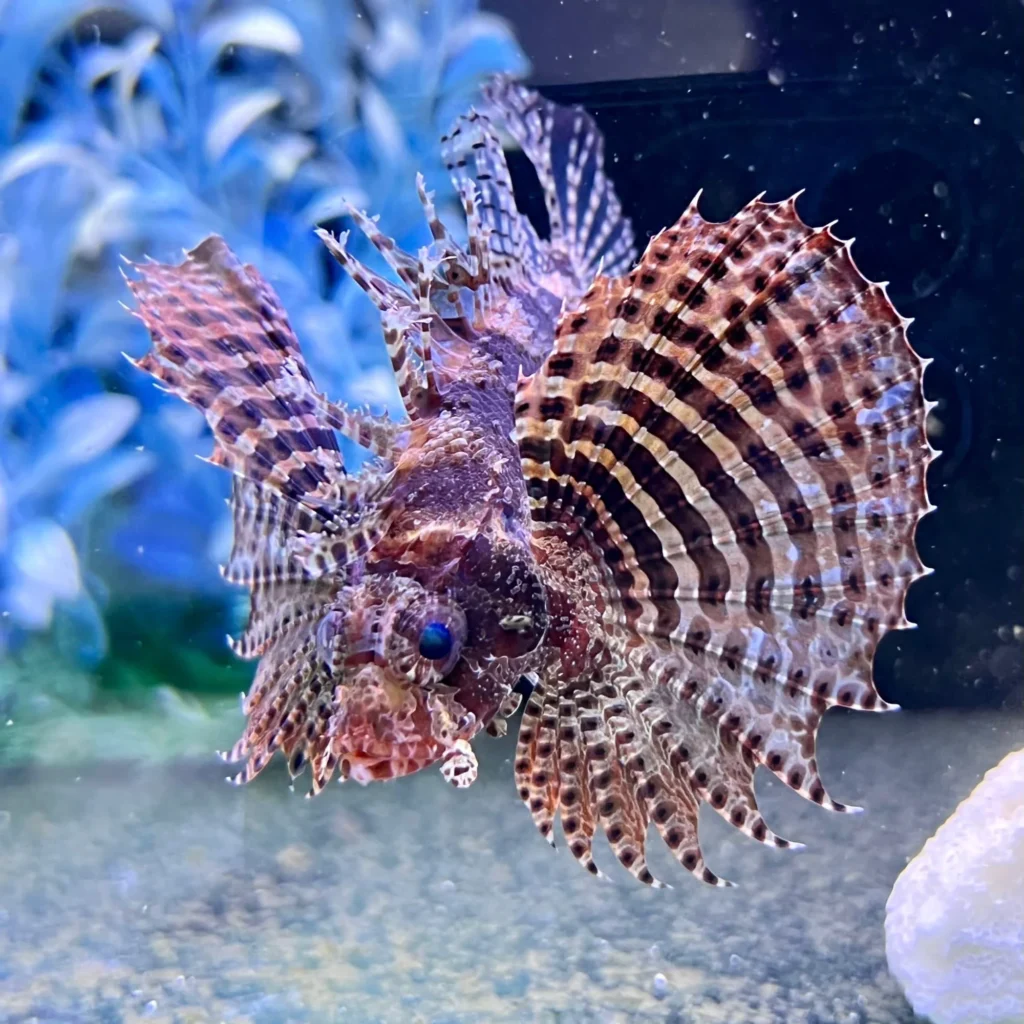
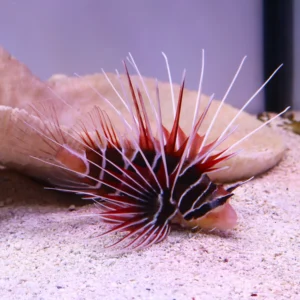
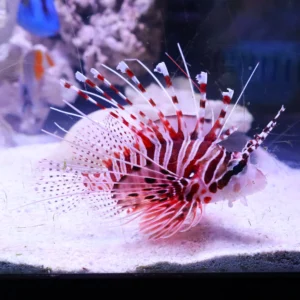
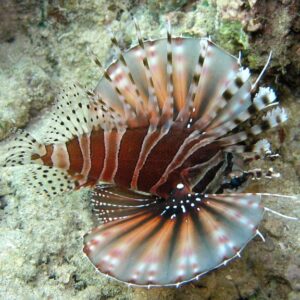
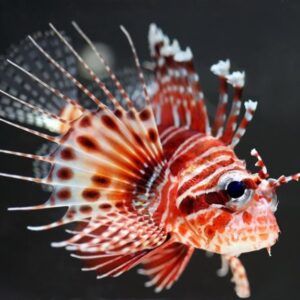
The Red Volitan Lionfish reaches a maximum total length of 45 cm (17.7 in), making it one of the largest lionfish species. The body is reddish-brown to grey with numerous thin vertical bands of alternating dark and light coloration. The pectoral fins are large and fan-shaped with long, free rays extending beyond the membrane. The dorsal fin has 13 spines and 10-11 soft rays while the anal fin has 3 spines and 6-7 soft rays. The head is large with a sloping profile and the mouth is terminal with small teeth. The fleshy tentacles above the eyes are variable in shape and color.
Diet and Feeding
The Red Volitan Lionfish is a voracious carnivorous predator that feeds on a wide variety of small fish and crustaceans. It uses its large pectoral fins to herd prey into a corner before swallowing them whole with remarkable speed. It is an ambush predator that can consume prey up to half its own body length. In the aquarium it readily accepts frozen foods including mysis shrimp, brine shrimp, squid, and chopped fish.
Behavior and Reproduction
This species is generally solitary but can be found in small groups. It is primarily nocturnal but can be active during the day in some areas. It is territorial and will defend its hiding place from other lionfish. Reproduction involves the male and female performing a courtship dance before the female releases a buoyant egg mass containing up to 40,000 eggs that is fertilized by the male. The eggs hatch in approximately 36 hours and the larvae are pelagic.
Aquarium Care
The Red Volitan Lionfish requires a tank of at least 75 gallons with ample live rock and hiding places. It is generally reef-safe with caution as it will eat small fish and ornamental shrimp. It is compatible with larger peaceful fish but should not be housed with species small enough to be eaten. This species is very hardy and adapts well to captivity. Water temperature should be maintained between 72-82 F (22-28 C) with pH 8.1-8.4 and dKH 8-12.
Conservation Status
Classified as Least Concern by the IUCN Red List.

Reviews
There are no reviews yet.