
| Parameter | Value |
|---|---|
| Diet | Omnivore |
| dKH | 8-12 |
| Maximum Size | 18 cm (7.1 in) |
| Minimum Tank Size | 55 gallons (208 L) |
| pH | 8.1-8.4 |
| Temperament | Peaceful |
| Temperature | 72-82 F (22-28 C) |
| Weight | Approximately 80 g (2.8 oz) at maximum size |
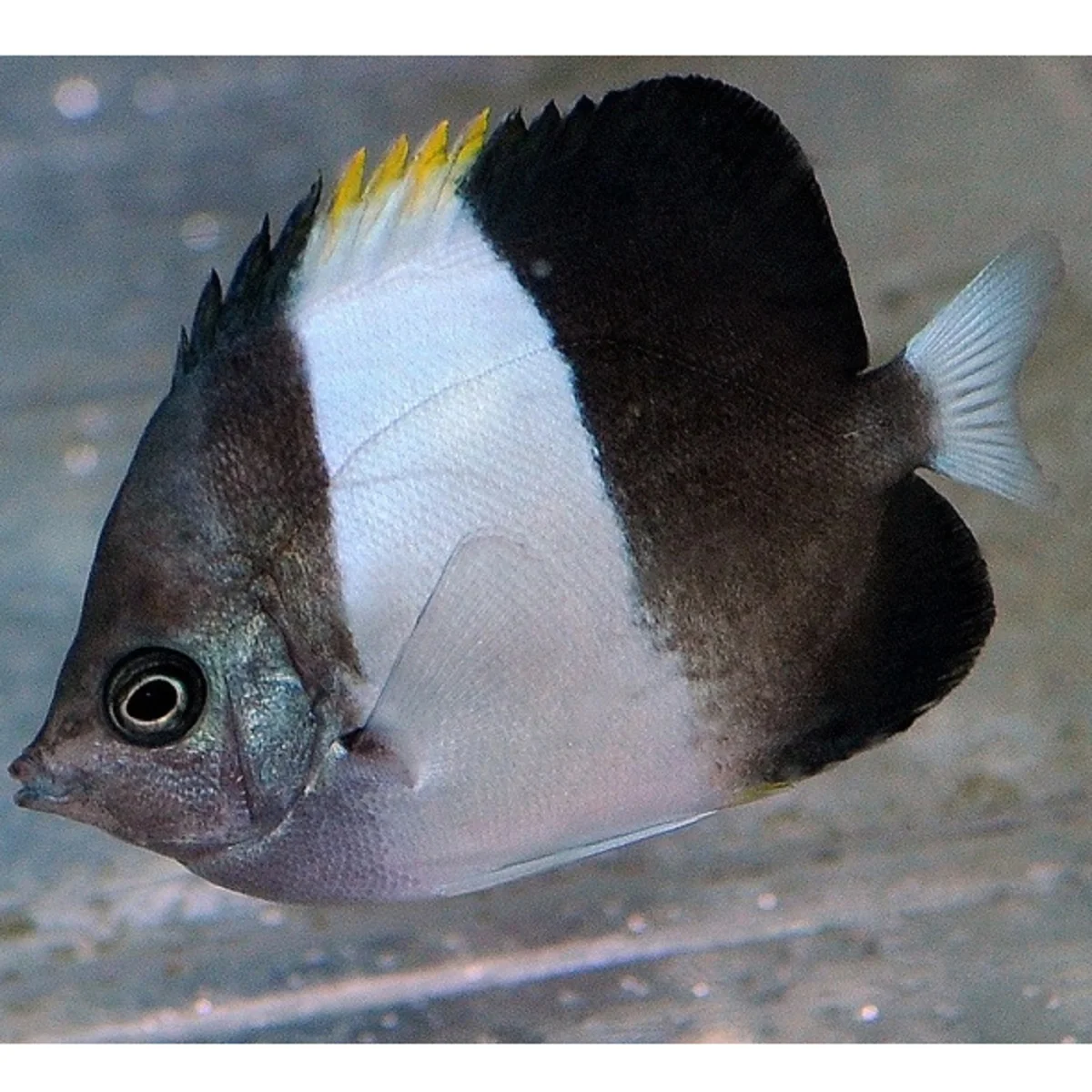
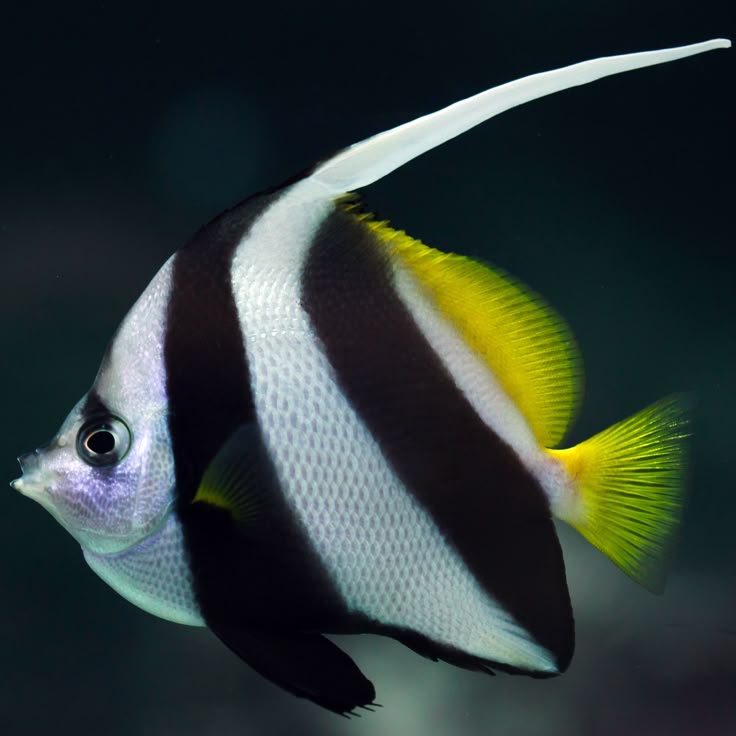
The Zoster Butterflyfish (Hemitaurichthys zoster), also known as the Brown-and-white Butterflyfish, Black Pyramid Butterflyfish, or Brushtooth Butterflyfish, is a marine ray-finned fish belonging to the family Chaetodontidae. It is native to the Indian Ocean.
Distribution and Habitat
The Zoster Butterflyfish is widespread throughout tropical and subtropical waters of the Indian Ocean from the eastern coast of Africa to Java in Indonesia and from India to Mauritius. It lives in large schools on outer reef slopes.
Physical Description
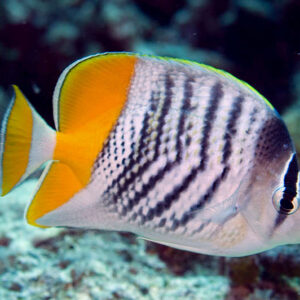
The Zoster Butterflyfish is a small-sized fish that can reach a maximum length of 18 cm (7.1 in). Its body is compressed laterally with a rounded body profile. The snout is somewhat stretched with a small terminal protractile mouth. The body is black, crossed in its center by a broad white trapezoid band with a yellow top corresponding to the center of the dorsal fin. The caudal fin is white.
Diet and Feeding
The Zoster Butterflyfish is a planktivore that feeds on plankton in the water column. It sallies from outer reef slopes into open water to feed. In captivity, it accepts a varied diet including mysis shrimp, brine shrimp, and frozen plankton-based preparations.
Behavior and Reproduction
This species lives in large schools on outer reef slopes. It is an oviparous species. Pelagic eggs are scattered in open water.
Aquarium Care
The Zoster Butterflyfish requires a tank of at least 55 gallons with excellent water quality and ample swimming space. It is peaceful and can be kept in groups. It is considered reef-safe due to its plankton-based diet. It is rare in the aquarium trade.
Conservation Status
Classified as Least Concern by the IUCN Red List. As a planktivore, the species may be affected by climate-induced reductions in planktonic productivity.
Reviews
There are no reviews yet.