
| Parameter | Value |
|---|---|
| Diet | Omnivore |
| dKH | 8-12 |
| Maximum Size | 11 cm (4.3 in) |
| Minimum Tank Size | 20 gallons (76 L) |
| pH | 8.1-8.4 |
| Temperament | Semi-aggressive |
| Temperature | 72-82 F (22-28 C) |
| Weight | Approximately 20 g (0.7 oz) |
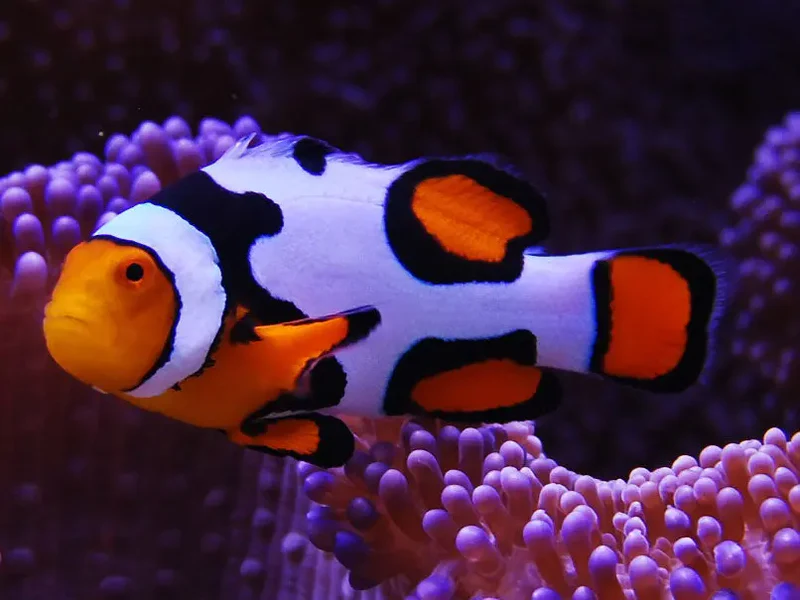
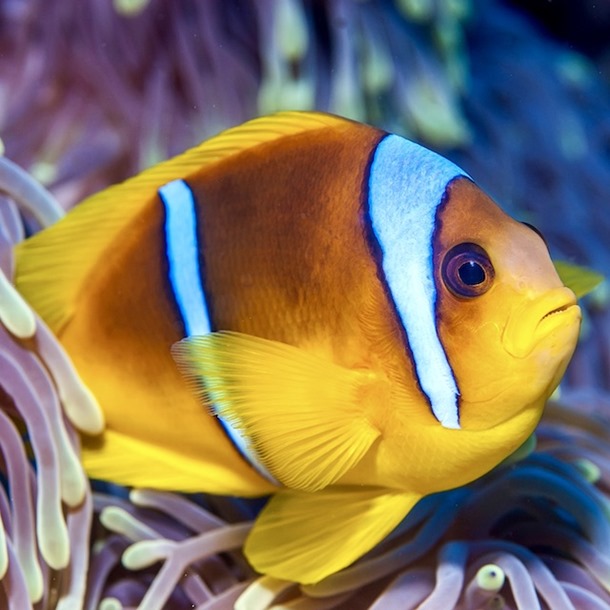
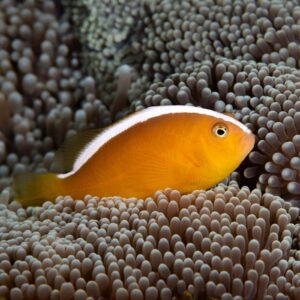
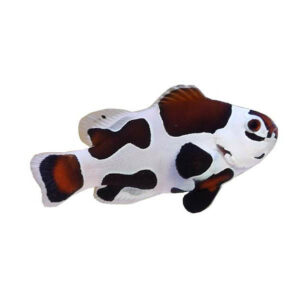
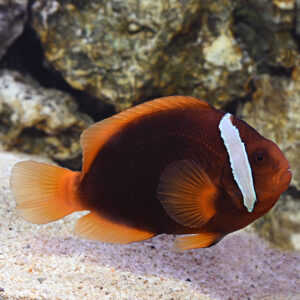
The Picasso Percula Clownfish (Amphiprion percula) is a selectively bred color variant of the Orange Clownfish, also known as the Percula Clownfish or Clown Anemonefish. The Picasso variant displays irregular white stripe patterns that are more broken and artistic in appearance compared to the standard percula.
Distribution and Habitat
The Orange Clownfish is found in warmer waters in the Pacific and Indian Oceans, off northwest Australia, southeast Asia, and Japan. It is associated specifically with Heteractis magnifica and Stichodactyla gigantea sea anemones. Both the fish and the anemones reside in shallow waters where the depth usually does not exceed 12 meters.
Physical Description
The Orange Clownfish can grow to be 11 cm (4.3 in) in length but is on average 8 cm (3.1 in). It can be recognized by three white lines across their bright orange bodies, with no distinction in color between sexes. The Picasso variant has irregular and broken white stripe patterns. A. percula has 10 spines in the first dorsal fin which distinguishes it from the similar A. ocellaris which has 11.
Diet and Feeding
The Orange Clownfish feeds on algae, zooplankton, worms, and small crustaceans. In captivity it accepts a varied diet including flakes, brine shrimp, mysis shrimp, and pellets.
Behavior and Reproduction
The Orange Clownfish is a sequential hermaphrodite with a strict size-based dominance hierarchy. The female is largest, the breeding male is second largest. If the female dies, the breeding male becomes the breeding female. The spawning process is correlated with the lunar cycle. The female spawns about 400 to 1500 eggs per cycle.
Aquarium Care
This species is semi-aggressive and territorial. It requires a tank of at least 20 gallons with abundant live rock. It is considered reef-safe. In an aquarium this fish is peaceful and can live well in a captive environment.
Conservation Status
Classified as Least Concern by the IUCN Red List.

Reviews
There are no reviews yet.