
| Parameter | Value |
|---|---|
| Lighting | Low to Moderate |
| Water Flow | Low to Moderate |
| Care Level | Easy |
| Temperament | Peaceful |
| Placement | Sand bed |
| Size | Small |
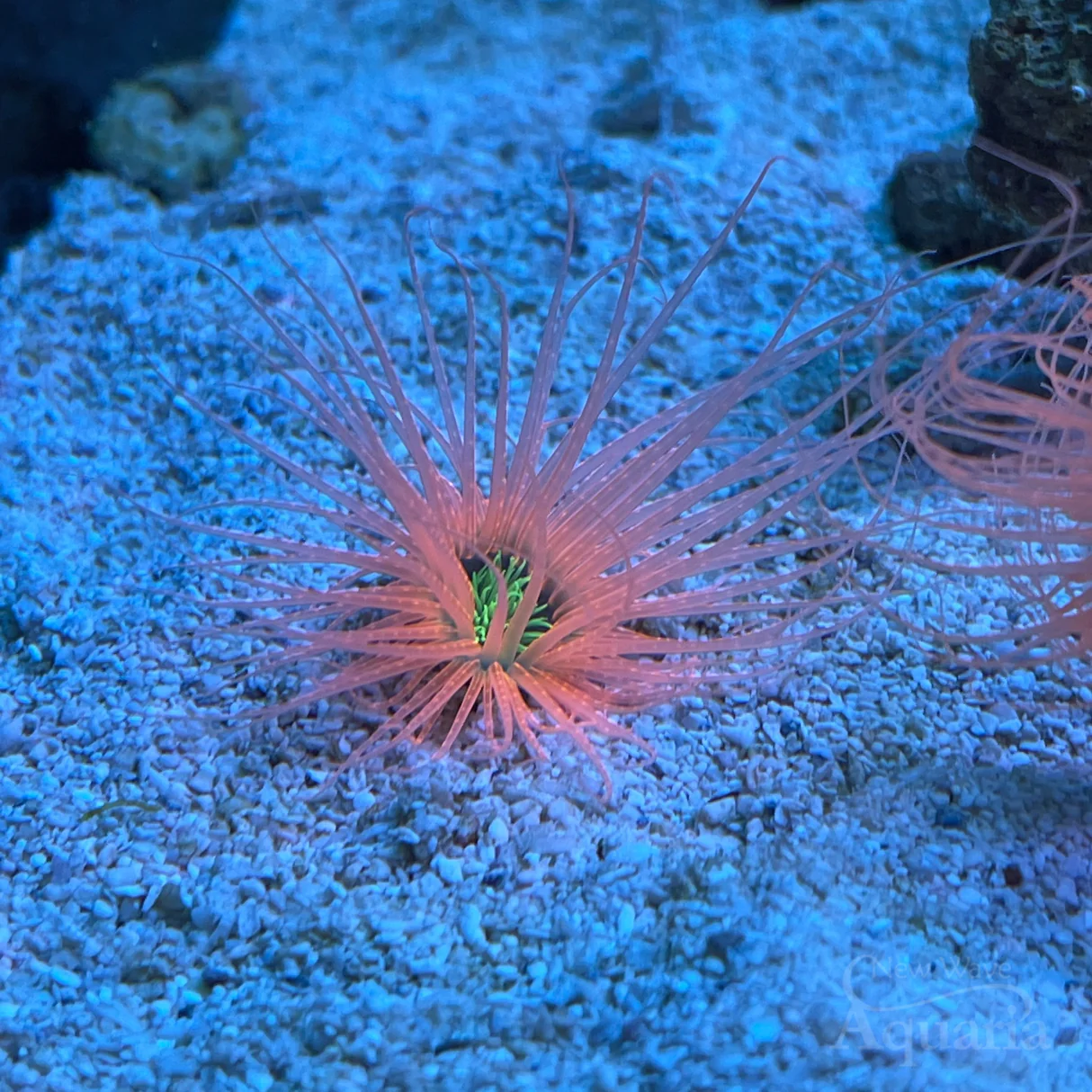
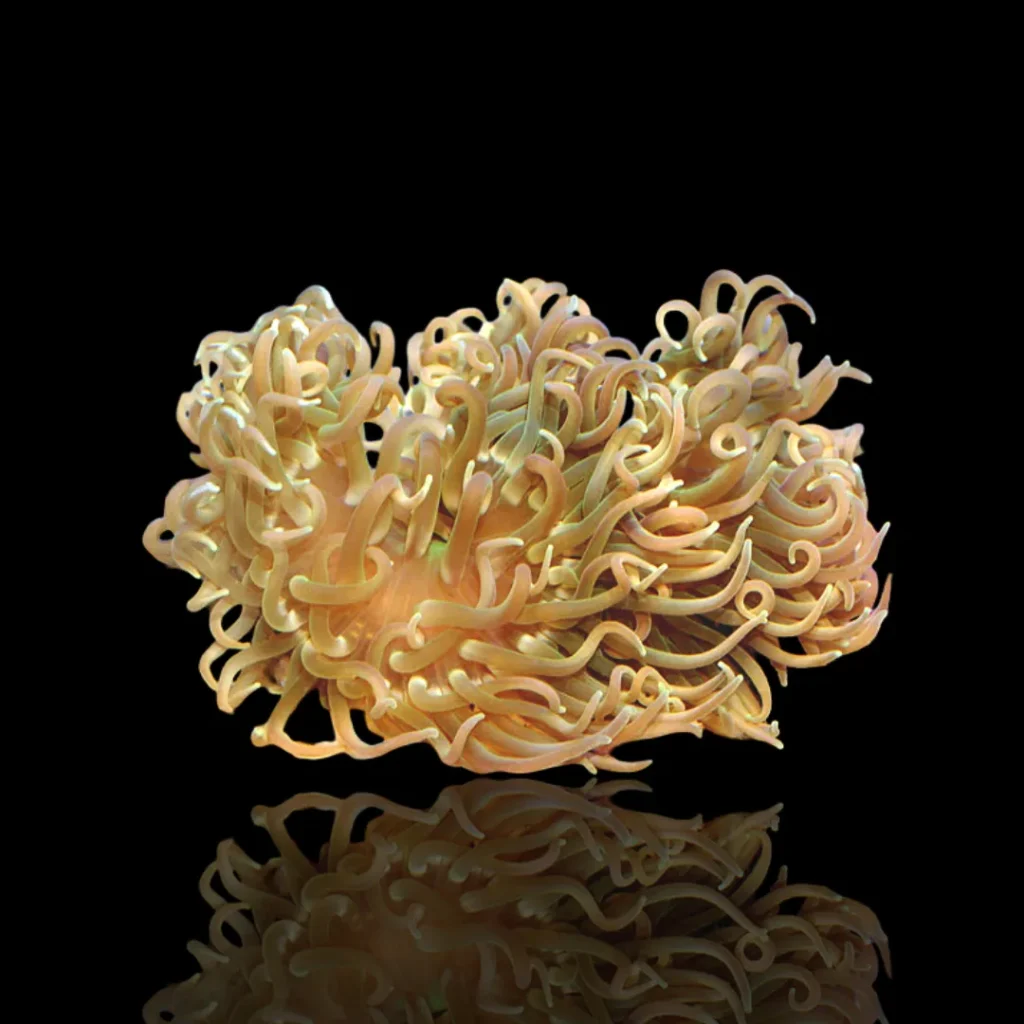
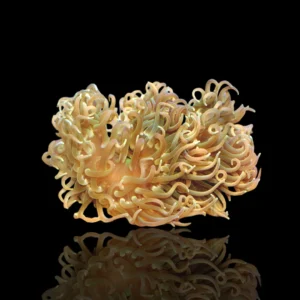
The Orange Tube Anemone (Cerianthus sp.) is a captivating burrowing invertebrate admired for its glowing orange tentacle crown. It builds a protective fibrous tube in the sand bed where it resides securely. Its unique lifestyle and striking color make it a fantastic addition to calm reef systems.
Distribution and Habitat
This species is native to tropical waters across the Indo-Pacific region. It inhabits sheltered lagoons, sandy flats, and calm coastal slopes with gentle water currents. In these calm benthic zones, it burrows deeply into soft sediment.
Physical Description
This small tube anemone possesses a soft body shielded inside a parchment-like tube. Its oral disc displays two concentric rings of slender, radiant orange tentacles used to filter food. Shorter inner tentacles transfer food directly to its mouth.
Diet and Feeding
Because it is non-photosynthetic, it relies entirely on capturing drifting micro-foods from the water column. In aquariums, it readily accepts target feedings of mysis and enriched brine shrimp. Regular feedings maintain its vigor and tentacle expansion.
Behavior and Reproduction
The Orange Tube Anemone is a peaceful substrate dweller that stays anchored in its burrow. When disturbed, it rapidly retracts its entire crown into its protective tube for safety. It coexists harmoniously alongside peaceful tankmates.
Aquarium Care
Husbandry is straightforward in stable systems with a sand bed at least three inches deep. Low to moderate lighting and gentle water movement encourage full daytime tentacle expansion.
Conservation Status
Cerianthus species remain abundant and widely distributed across the Indo-Pacific. Sustainable collection practices ensure wild populations remain stable and healthy. Classified as Least Concern by the IUCN Red List.
Reviews
There are no reviews yet.