
| Parameter | Value |
|---|---|
| Lighting | Low to Moderate |
| Water Flow | Low |
| Care Level | Easy |
| Temperament | Peaceful |
| Placement | Sand bed |
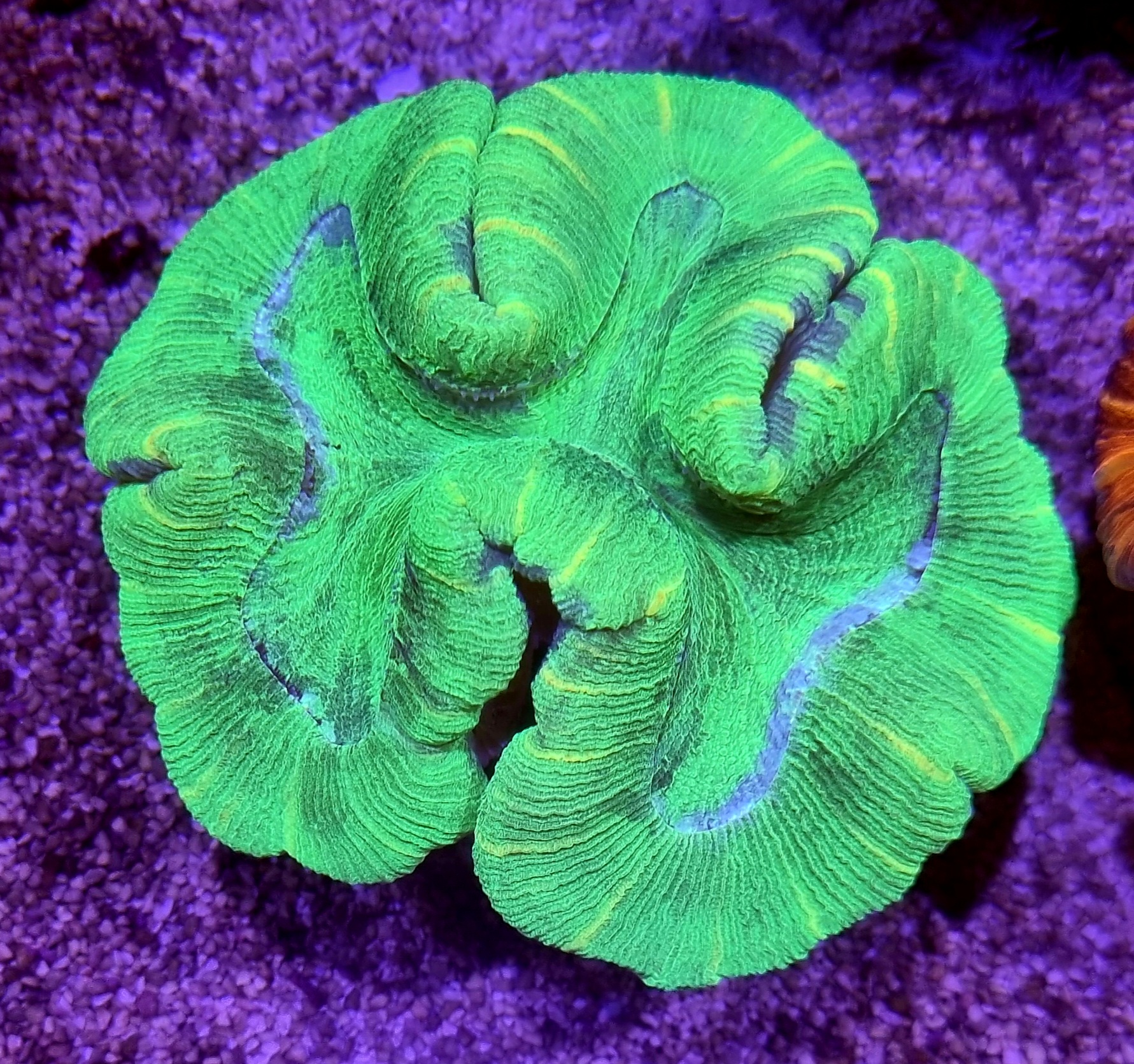
The Green Trachyphyllia Brain Coral is a widely recognized large polyp stony coral known scientifically as Trachyphyllia geoffroyi. This captivating species forms a distinctive open brain structure that expands gracefully during daylight hours. It remains a classic centerpiece choice for beginner and experienced reef aquarists alike.
Distribution and Habitat
This coral is native to the warm tropical waters of the Indo-Pacific region. It naturally inhabits protected lagoons and sheltered lower reef slopes on sandy or muddy substrates. In these environments, it thrives where water currents are gentle and light penetration is moderate.
Physical Description
The coral exhibits vibrant green folded ridges arranged in an intricate convoluted pattern over a heavy calcareous skeleton. During full expansion, its fleshy mantle inflates significantly to absorb light. At night, delicate feeder tentacles extend from the central oral discs to capture nutrients.
Diet and Feeding
It obtains a substantial portion of its nutritional requirements from symbiotic photosynthetic zooxanthellae. In captivity, supplementary target feedings of mysis shrimp, brine shrimp, and specialized micro-pellets greatly enhance tissue health and growth. Feedings should occur weekly after the lights are turned off.
Behavior and Reproduction
As a peaceful inhabitant, it possesses short sweeper tentacles that rarely harm neighboring sessile invertebrates. In the wild, reproduction occurs through seasonal broadcast spawning of gametes into the water column. In mature aquarium setups, occasional budding and slow skeletal expansion can be observed.
Aquarium Care
Keep this specimen positioned exclusively on a soft sand bed to avoid puncturing its delicate tissue against jagged rocks. Provide low to moderate indirect illumination alongside gentle laminar water movement. Stable calcium, alkalinity, and magnesium levels are essential to support long-term skeletal development.
Conservation Status
Wild populations face localized environmental pressures from coastal development and warming sea surface temperatures. Nonetheless, it remains widespread and sustainably managed in international trade. Classified as Least Concern by the IUCN Red List.


Reviews
There are no reviews yet.