

| Parameter | Value |
|---|---|
| Lighting | Low to Moderate |
| Water Flow | Low to Moderate |
| Care Level | Easy |
| Temperament | Peaceful |
| Placement | Any |
| Origin | Indonesia |
| Size | Small/Medium |
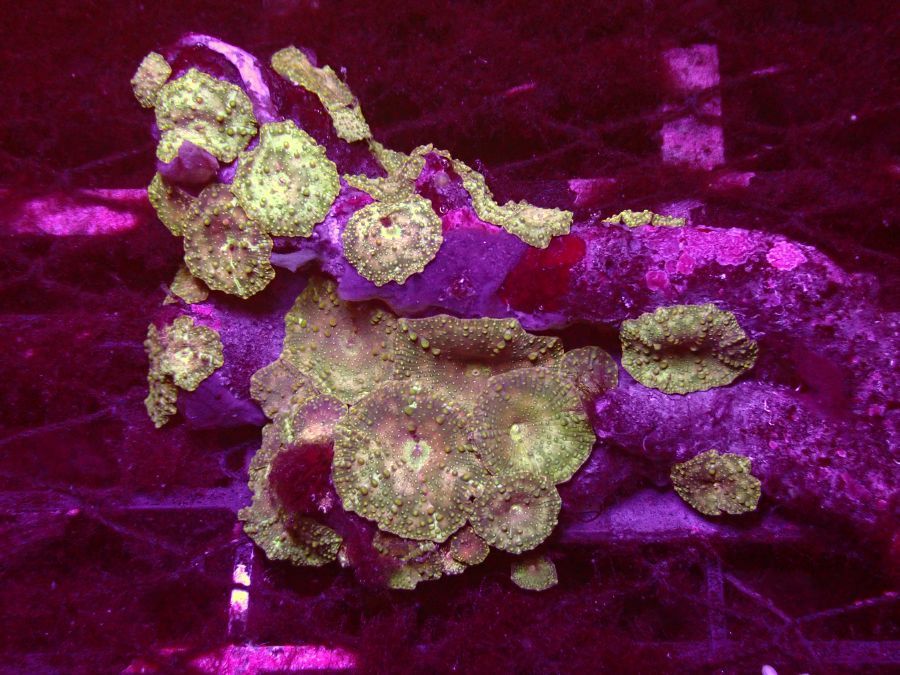
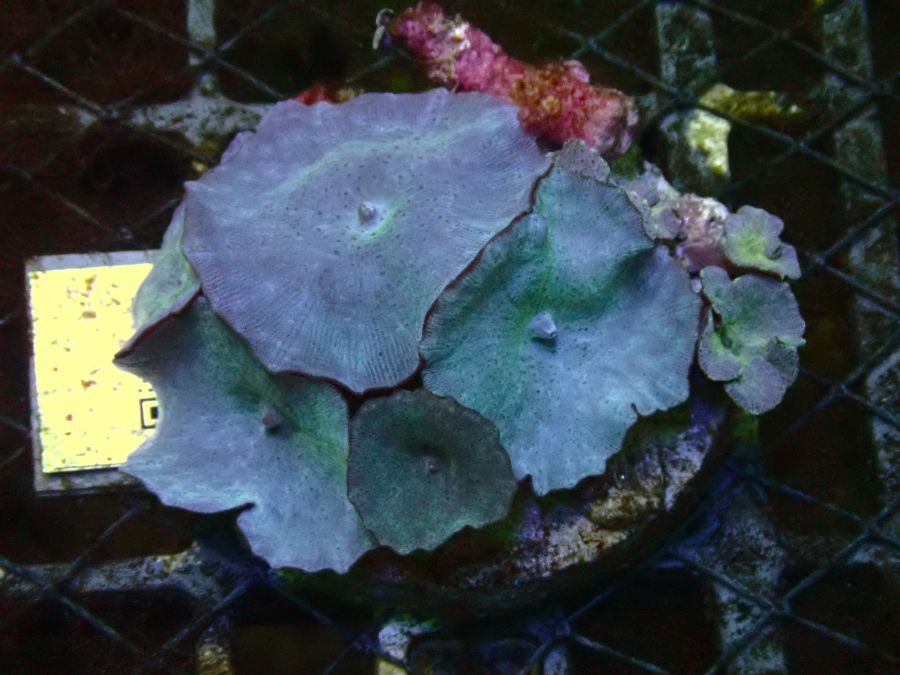
The Green Hairy Mushroom (Rhodactis sp.) is a hardy and attractive corallimorph famed for its bright green disc covered in fuzzy pseudotentacles. Originating from Indonesia, this soft coral is ideal for any reef aquarium. It readily multiplies to form lush carpets across aquarium rockwork.
Distribution and Habitat
This species is widely distributed across shallow tropical reefs of the Indo-Pacific, especially around Indonesia. It commonly populates reef flats, sheltered lagoons, and rocky substrate zones. In these warm shallow waters, it forms dense colonies attached to coral rubble.
Physical Description
This corallimorph features a circular fleshy disc carpeted with numerous branched, hair-like vesicles. Its coloration is predominantly bright green to emerald, often glowing under blue actinic lighting. Polyps expand generously under moderate flow and lighting.
Diet and Feeding
Symbiotic zooxanthellae provide the majority of its energy through standard photosynthesis. It also captures microplankton and dissolved organic matter directly from the water column. Occasional targeted feedings of mysis shrimp enhance growth and coloration.
Behavior and Reproduction
This soft coral maintains a peaceful temperament, making it well suited for community reef aquariums. It reproduces easily in captivity through fission, gradually spreading across rockwork. Its soft tentacles curl gently toward the mouth when capturing food.
Aquarium Care
Maintaining this mushroom coral is exceptionally straightforward due to its tolerance of varied water conditions. It thrives under low to moderate lighting and gentle, indirect water movement. Suitable for placement anywhere in the tank, it adapts effortlessly to reef setups.
Conservation Status
Rhodactis species are abundant, resilient, and widely distributed across Indo-Pacific coral reefs. Sustainable collection and captive propagation ensure minimal pressure on wild populations. Classified as Least Concern by the IUCN Red List.




Reviews
There are no reviews yet.