
| Parameter | Value |
|---|---|
| Lighting | Moderate |
| Water Flow | Moderate |
| Care Level | Difficult |
| Temperament | Peaceful |
| Placement | Low/Mid |
| Origin | Indonesia/Australia |
| Size | Medium/Large |
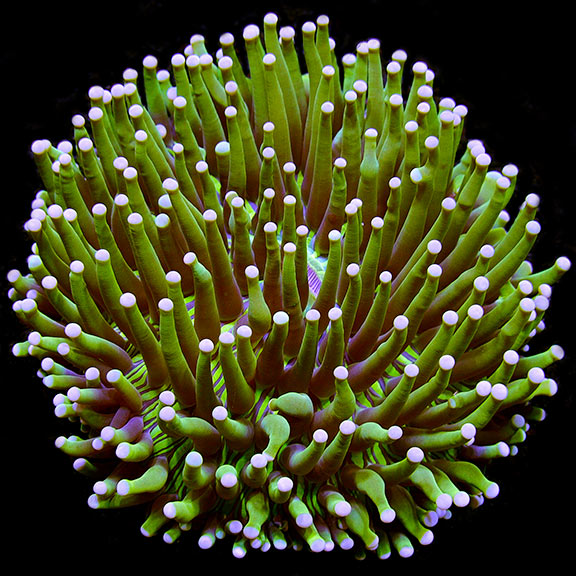
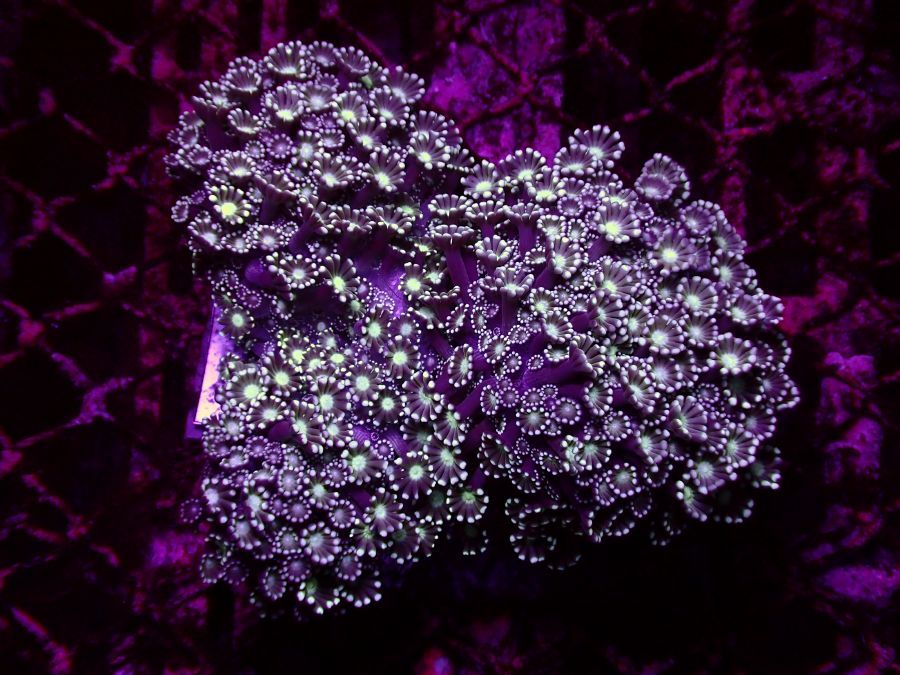
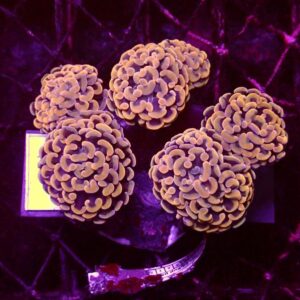
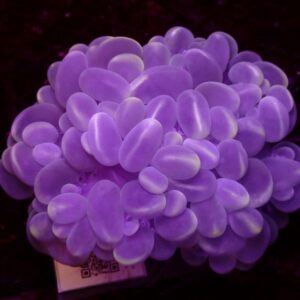
The Goniopora (Goniopora sp.), widely known among hobbyists as the Flower Pot Coral, is an iconic large polyp stony coral renowned for its breathtaking floral appearance. It features elongated fleshy polyps that extend gracefully from a solid central skeleton, mimicking a bouquet of blooming flowers.
Physical Description
This coral showcases a dense aragonite skeleton covered by long column-like polyp stalks crowned with twenty-four delicate tentacles encircling each oral disc. Polyp coloration ranges from vivid emerald green and rich pink to subtle cream, tan, and pastel yellow hues that ripple continuously in water currents.
Distribution and Habitat
Goniopora sp. is native to tropical reef environments across the vast Indo-Pacific, including the nutrient-rich coastal waters of Indonesia and Australia. It is frequently found inhabiting calm protected lagoons, turbid inner reef slopes, and shallow sandy bays.
Lighting and Flow Requirements
Moderate lighting is optimal for its overall health, as overly intense illumination can cause polyp retraction or tissue bleaching. Moderate, indirect water flow provides gentle circulation that encourages maximum polyp extension without tearing delicate tissues against the skeleton.
Feeding and Nutrition
Unlike many photosynthetic corals, Goniopora requires regular targeted feedings of specialized microfoods, rotifers, oyster eggs, and enriched cyclops to maintain long-term vitality and prevent gradual tissue recession.
Placement and Compatibility
Position this coral in low to mid areas of the aquarium where it can rest securely on the sand bed or low rockwork. Provide ample clearance from aggressive neighbors to avoid contact with damaging sweeper tentacles.
Conservation Status
Wild populations are widespread throughout diverse Indo-Pacific marine habitats. Established collection guidelines ensure reef preservation. Classified as Least Concern by the IUCN Red List.