
| Parameter | Value |
|---|---|
| Lighting | Moderate |
| Water Flow | Moderate |
| Care Level | Moderate |
| Temperament | Semi-aggressive |
| Placement | Sand bed |
| Origin | Philippines/Indonesia |
| Size | Small, Medium, Large |
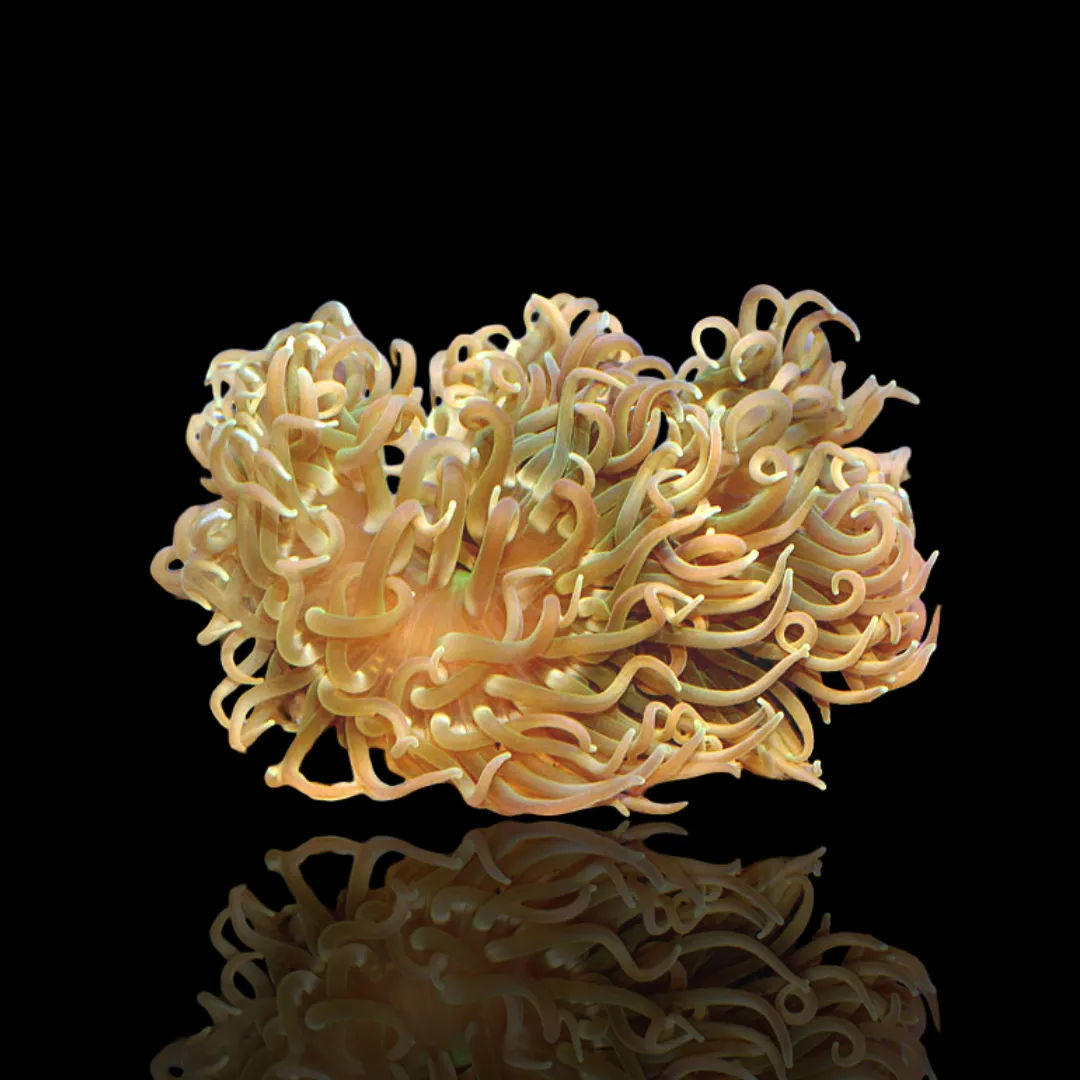
The Long Tentacle Anemone (Macrodactyla doreensis) is an iconic host anemone known for its sweeping tentacles and colorful column. It is highly valued for hosting clownfish in reef aquariums. Its graceful movement makes it a prized centerpiece for sand-bed displays.
Distribution and Habitat
Macrodactyla doreensis is native to tropical reefs of the Indo-Pacific, commonly sourced from the Philippines and Indonesia. It typically inhabits calm lagoons and sandy channels at depths of 5 to 20 meters. It buries its muscular foot deeply into soft substrate with only the tentacled disc exposed.
Physical Description
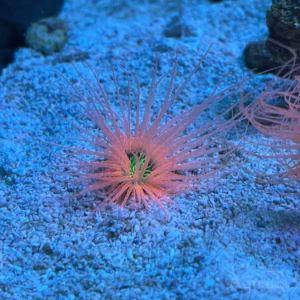
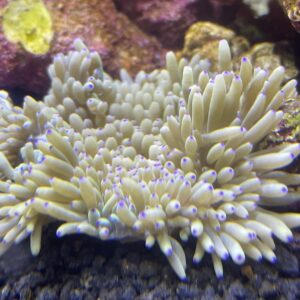
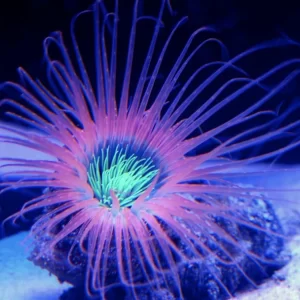
This species is distinguished by its elongated tentacles that sway gracefully in water currents. Its column is colored in bright red, orange, or tan tones with white verrucae. Available in multiple sizes, it creates an impressive visual presence.
Diet and Feeding
Photosynthetic zooxanthellae within its tissues generate nutrients from moderate aquarium lighting. It also benefits from weekly direct feedings of meaty marine foods like chopped shrimp and mysis. Regular feedings promote strong column expansion and health.
Behavior and Reproduction
In nature and aquariums, this anemone readily forms symbiotic bonds with clownfish like Amphiprion clarkii. Its stinging tentacles can deter neighboring corals, so open sand space is recommended. Once its foot anchors securely, it generally remains stationary.
Aquarium Care
Successful husbandry requires a mature marine aquarium with a fine sand bed at least three inches deep. Moderate lighting and moderate water movement allow its tentacles to extend without stress. Consistent water chemistry and low nitrate levels are essential for vitality.
Conservation Status
Macrodactyla doreensis maintains widespread and stable populations throughout the Indo-Pacific basin. Monitored collection practices and marine protection frameworks safeguard wild populations. Classified as Least Concern by the IUCN Red List.


Reviews
There are no reviews yet.