
| Parameter | Value |
|---|---|
| Diet | Omnivore |
| dKH | 8-12 |
| Maximum Size | 25 cm (9.8 in) |
| Minimum Tank Size | 100 gallons (379 L) |
| pH | 8.1-8.4 |
| Temperament | Semi-aggressive |
| Temperature | 72-82 F (22-28 C) |
| Weight | Approximately 250 g (8.8 oz) at maximum size |
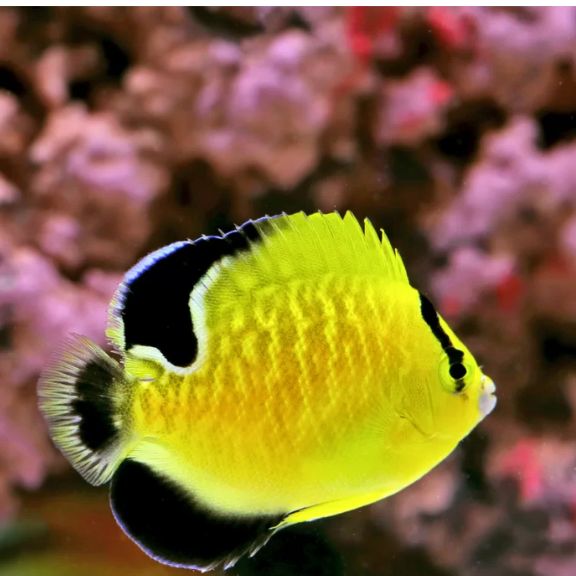
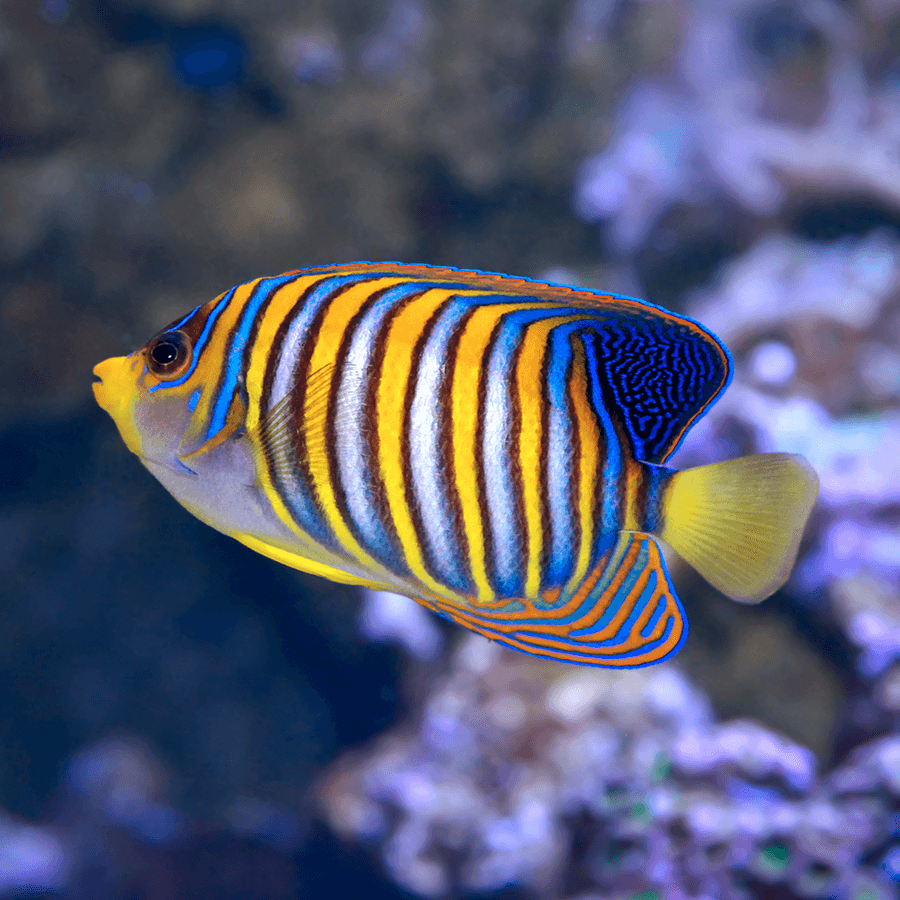
The Goldflake Angelfish, Juvenile (Apolemichthys xanthopunctatus) is the juvenile form of the Goldspotted Angelfish, a species of marine angelfish belonging to the family Pomacanthidae. It was first formally described in 1973 by George Burgess. The species
Distribution and Habitat
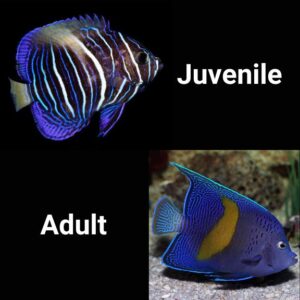
is native to the Pacific Ocean, where it can be found from the Gilbert Islands to the Line Islands. Juvenile Goldflake Angelfish display a more intense and contrasting coloration than adults, with vivid golden-yellow spots standing out against a darker blue-black body. The spotting pattern is typically bolder and more defined in juveniles, making them especially prized
Aquarium Care
in the aquarium trade. As the fish matures, the spots may become more evenly distributed and the body coloration may lighten.
Physical Description
This species attains a maximum total length of approximately 25 cm (9.8 in). The Goldflake Angelfish is found in coral reef habitats at moderate depths. It
Diet and Feeding
feeds on benthic invertebrates, particularly sponges and tunicates. In captivity, it should be offered a varied diet including marine-based meaty foods, spirulina, marine algae, and high-quality angelfish preparations containing sponge material. The Goldflake Angelfish requires a tank of at least 100 gallons with stable water conditions and abundant live rock. It is semi-aggressive and should be kept as the only angelfish in the tank. Not considered reef-safe.
Conservation Status
Classified as Least Concern by the IUCN Red List.


Reviews
There are no reviews yet.