
| Parameter | Value |
|---|---|
| Diet | Omnivore |
| dKH | 8-12 |
| Maximum Size | 35 cm (13.8 in) |
| Minimum Tank Size | 150 gallons (568 L) |
| pH | 8.1-8.4 |
| Temperament | Semi-aggressive |
| Temperature | 72-80 F (22-27 C) |
| Weight | Approximately 900 g (2.0 lbs) at maximum size |
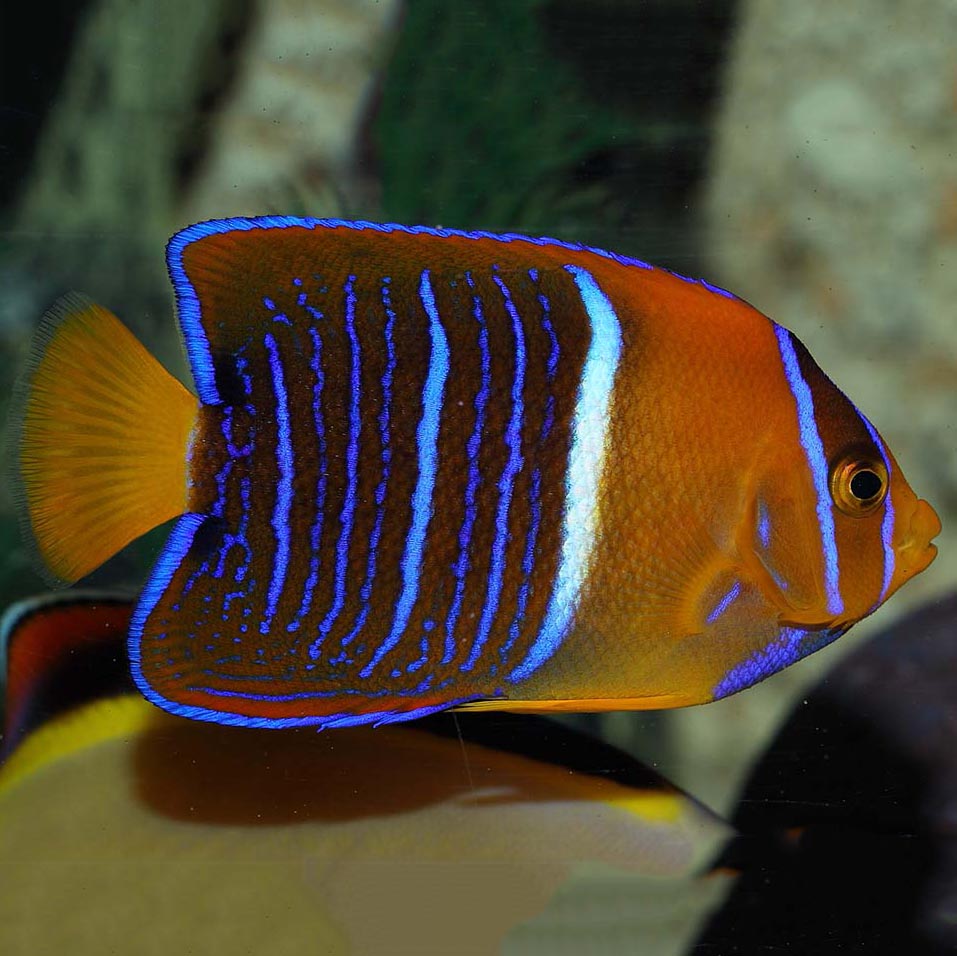
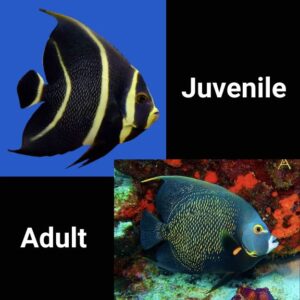
The Passer Angelfish (Holacanthus passer), also known as the King Angelfish, is a large reef-dwelling marine angelfish of the family Pomacanthidae. It is a non-migratory tropical fish that inhabits reefs in the eastern Pacific Ocean from the coast of Peru north to the Gulf of California, including offshore islands as far west as the Galapagos, generally at depths of 4 to 30 meters. Adult king angelfish are generally about 35 cm in length. They have a strong spike under their lower cheek for defense. King angelfish undergo significant changes in coloration as they mature. Juvenile king angelfish are primarily orange-yellow including the pectoral and pelvic fins, rounded dorsal and
Physical Description
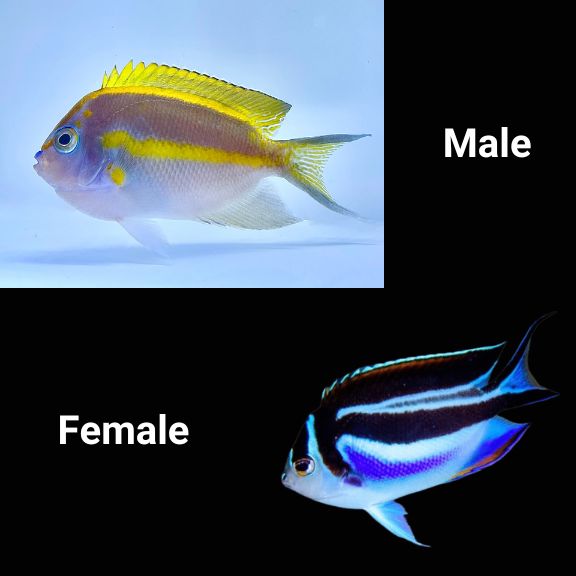
anal fins rimmed with iridescent blue, blue striping towards the posterior of their bodies, and an orange mask around the eye. Sexually mature king angelfish have mostly brown or blue bodies, light yellow pectoral and pelvic fins, a yellow patch on the mouth, blue rimming around the dorsal and anal fins, and a yellow caudal tail. Adults have a white stripe laterally anterior to the head. Sexual dimorphism exists since females tend to have yellow pelvic fins, whereas males tend to have white pelvic fins. Males are up to 50 percent longer and 300 percent heavier than females. King angelfish are diurnal and
Diet and Feeding
feed on sponges, other sessile invertebrates, zooplankton, and certain species of benthic microalgae. They also frequently engage in coprophagy and act as cleaner fish for other species. King angelfish are
Behavior and Reproduction
monogamous within their pairs and are broadcast spawners.
Aquarium Care
The Passer Angelfish requires a tank of at least 150 gallons with stable water conditions. They require live sponges and tunicates as a food source and will often not accept prepared foods. Not considered reef-safe.
Conservation Status
Classified as Least Concern by the IUCN Red List.

Reviews
There are no reviews yet.