
| Parameter | Value |
|---|---|
| Scientific Name | Hemiscyllium ocellatum |
| Conservation Status | Least Concern |
| Diet | Carnivore |
| Maximum Size | 107 cm (42 in) |
| Temperament | Peaceful |
| Reef Safe | With caution |
| Origin | Western Pacific |
| Temperature | 72-78 F (22-26 C) |
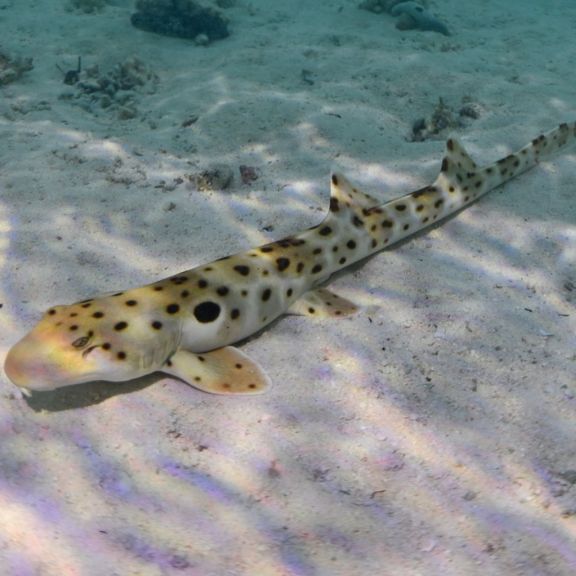
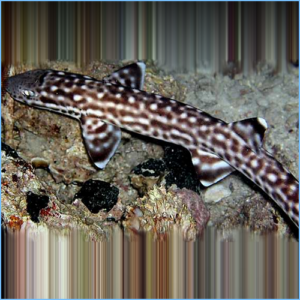
The Epaulette Shark (Hemiscyllium ocellatum) is a small exceptionally hardy carpet shark of the family Hemiscylliidae. Native to Australasian waters, it is renowned for its remarkable ability to survive out of water. Its modest size and peaceful temperament make it one of the few sharks suitable for large home aquariums.
Distribution and Habitat
The Epaulette Shark is distributed across the western Pacific, occurring around northern and eastern Australia and New Guinea. It inhabits shallow coral reefs, lagoons, seagrass beds, and intertidal tide pools, often living in very shallow well-oxygenated water that protects it from larger predators.
Physical Description
The Epaulette Shark has an elongated slender body with a flattened head and small barbels beneath the snout. A band of small dark spots runs along its body, and behind each pectoral fin sits a large dark ocellus ringed with white, resembling an epaulette. It reaches 107 cm (42 inches).
Diet and Feeding
The Epaulette Shark is a nocturnal carnivore that feeds on small benthic invertebrates such as crabs, shrimp, worms, and small fish. It forages among coral rubble and tide pools using its barbels and acute sense of smell. In captivity it accepts shrimp, krill, and prepared carnivore pellets.
Behavior and Reproduction
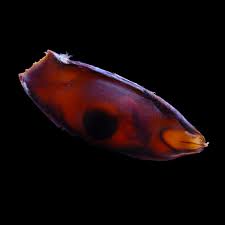
The Epaulette Shark is a calm bottom-dwelling species active mainly at night. It is famous for surviving low-oxygen conditions and actively walking across exposed reef flats between pools. Reproduction is oviparous: females deposit tough egg cases, and the juveniles are independent from birth.
Aquarium Care
The Epaulette Shark requires at least 180 gallons (681 L) with a large floor area and deep smooth fine sand. Water temperature should be 72-78 F (22-26 C). It can be kept with caution in reef systems, as it will eat small crabs and shrimp. It suits experienced large home aquariums.
Conservation Status
Classified as Least Concern by the IUCN Red List.
Reviews
There are no reviews yet.