
| Parameter | Value |
|---|---|
| Scientific Name | Chiloscyllium punctatum |
| Conservation Status | Least Concern |
| Diet | Carnivore |
| Maximum Size | 120 cm (47 in) |
| Temperament | Semi-aggressive |
| Reef Safe | No |
| Origin | Indo-Pacific |
| Temperature | 72-78 F (22-26 C) |
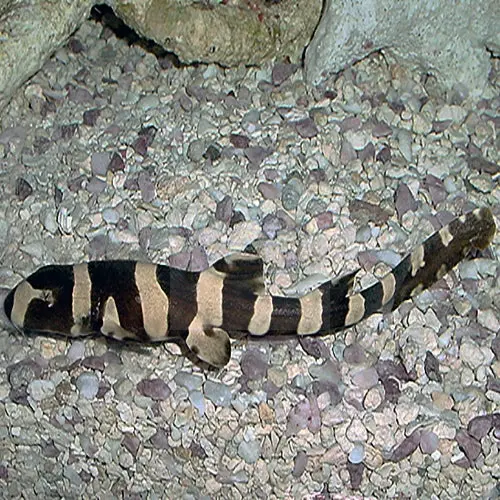
The Banded Cat Shark (Chiloscyllium punctatum) is a small, hardy carpet shark belonging to the family Hemiscylliidae. Native to the tropical Indo-Pacific, this elegant bottom-dweller is one of the most popular sharks kept in large home aquariums. Its striking banded pattern and docile disposition have made it a favorite among advanced aquarists.
Distribution and Habitat
The Banded Cat Shark is distributed across the Indo-West Pacific, ranging from India and Southeast Asia to Japan and northern Australia. It inhabits coral reefs, lagoons, and sandy or muddy bottoms, usually at depths of less than 50 meters. Juveniles are frequently encountered in intertidal pools and shallow coastal waters.
Physical Description
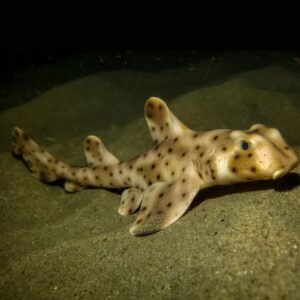
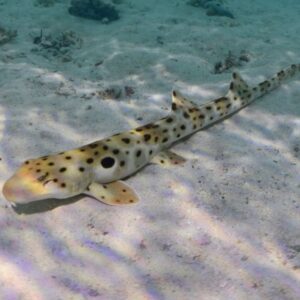
The Banded Cat Shark has an elongated, cylindrical body with a relatively small head and eyes situated high on the skull. Dark brown vertical bands and black spots decorate its sandy-brown body, a pattern that gradually fades as the shark matures. It reaches a maximum length of 120 cm (47 inches).
Diet and Feeding
In the wild, the Banded Cat Shark is a nocturnal carnivore that feeds on small fish, crabs, shrimp, and other benthic invertebrates. Its barbels and sensitive electroreceptors help it locate buried prey in the sand. In captivity, it readily accepts a varied diet of chopped fish, squid, krill, and prepared shark foods.
Behavior and Reproduction
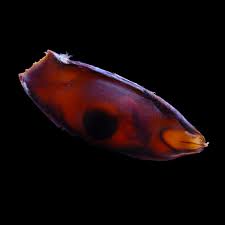
The Banded Cat Shark is nocturnal and spends daylight hours resting on the substrate, often wedged between rocks or beneath ledges. It is a solitary bottom-dweller that breathes via a buccal pump, allowing it to remain stationary. Reproduction is oviparous: females deposit leathery dark-brown egg cases, each containing a single embryo.
Aquarium Care
The Banded Cat Shark requires an aquarium of at least 180 gallons (681 L) with a large floor area and a deep bed of smooth, fine sand. Caves and overhangs are essential for daytime shelter. Water temperature should be 72-78 F (22-26 C) with excellent filtration. It is not reef safe, and it should be handled with care.
Conservation Status
Classified as Least Concern by the IUCN Red List.

Reviews
There are no reviews yet.