
| Parameter | Value |
|---|---|
| Diet | Carnivore |
| dKH | 8-12 |
| Maximum Size | 70 cm (28 in) |
| Minimum Tank Size | 150 gallons (568 L) |
| pH | 8.1-8.4 |
| Temperament | Aggressive |
| Temperature | 72-82 F (22-28 C) |
| Weight | Approximately 3 kg (6.6 lbs) |
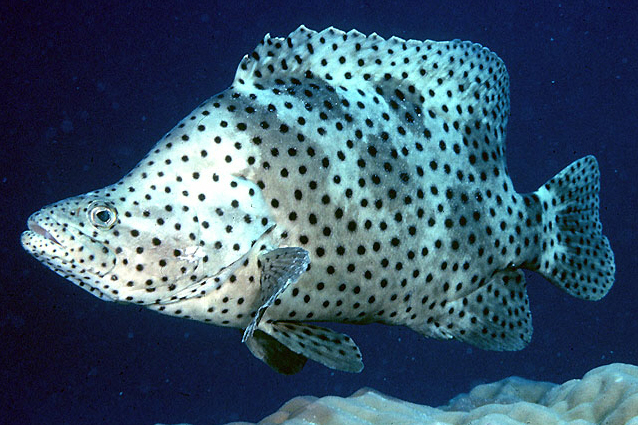
The Panther Grouper (Cromileptes altivelis), also known as the Humpback Grouper or Barramundi Cod, is a species of marine ray-finned fish belonging to the family Epinephelidae.
Distribution and Habitat
The Panther Grouper is widely distributed throughout the tropical waters of the central Indo-West Pacific region. It lives in clear waters from lagoons and seaward reefs with a preference for dead or silty areas. They are found at depths from 2 to 40 meters, but usually at depths less than 10 meters.
Physical Description
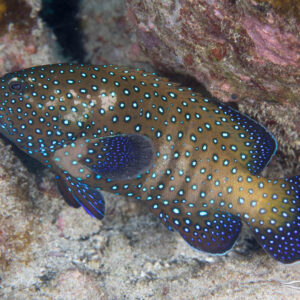
The Panther Grouper grows up to 70 cm (28 in). Its body is compressed laterally and has a unique head profile with a depressed anterior and elevated posterior, giving it a distinctive humpbacked appearance. The young are white with round black spots. The adults have a body colouration with variances of grey and beige with darker blotches and small black spots covering the whole body.
Diet and Feeding
The diet of this grouper is based on small fishes and crustaceans such as krill, shrimp, squids, and clams. It is an ambush predator with feeding activity maximal at sunrise and sunset. In captivity it should be fed a variety of meaty foods.
Behavior and Reproduction
This species is a protogynous hermaphrodite. All individuals are born female with the ability to transform to males as they grow older. Female humpback groupers start transitioning to males as early as 3 years. Although primarily solitary they are also known to swim in pairs or sometimes in groups of 3 to 6.
Aquarium Care
It requires a tank of at least 150 gallons with plenty of swimming space and hiding spots. It is aggressive and should be kept with similarly sized or larger tankmates. It will eat smaller fish and should not be housed with small peaceful species.
Conservation Status
Classified as Data Deficient by the IUCN Red List.


Reviews
There are no reviews yet.