
| Parameter | Value |
|---|---|
| Diet | Carnivore |
| dKH | 8-12 |
| Maximum Size | 100 cm (39 in) |
| Minimum Tank Size | 55 gallons (208 L) |
| pH | 8.1-8.4 |
| Temperament | Semi-aggressive |
| Temperature | 72-82 F (22-28 C) |
| Weight | Approximately 1 kg (2.2 lbs) |
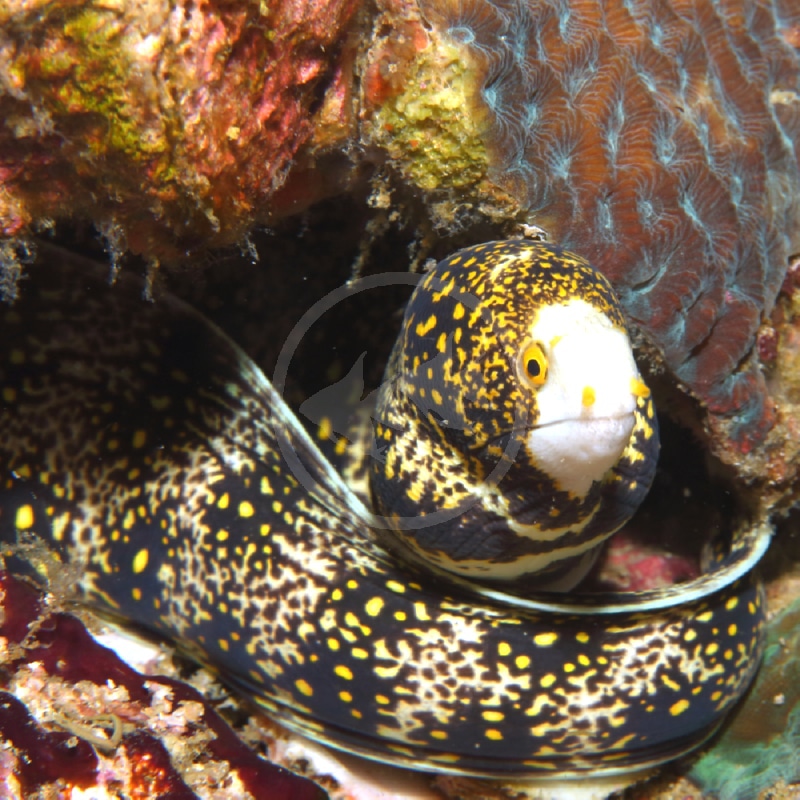
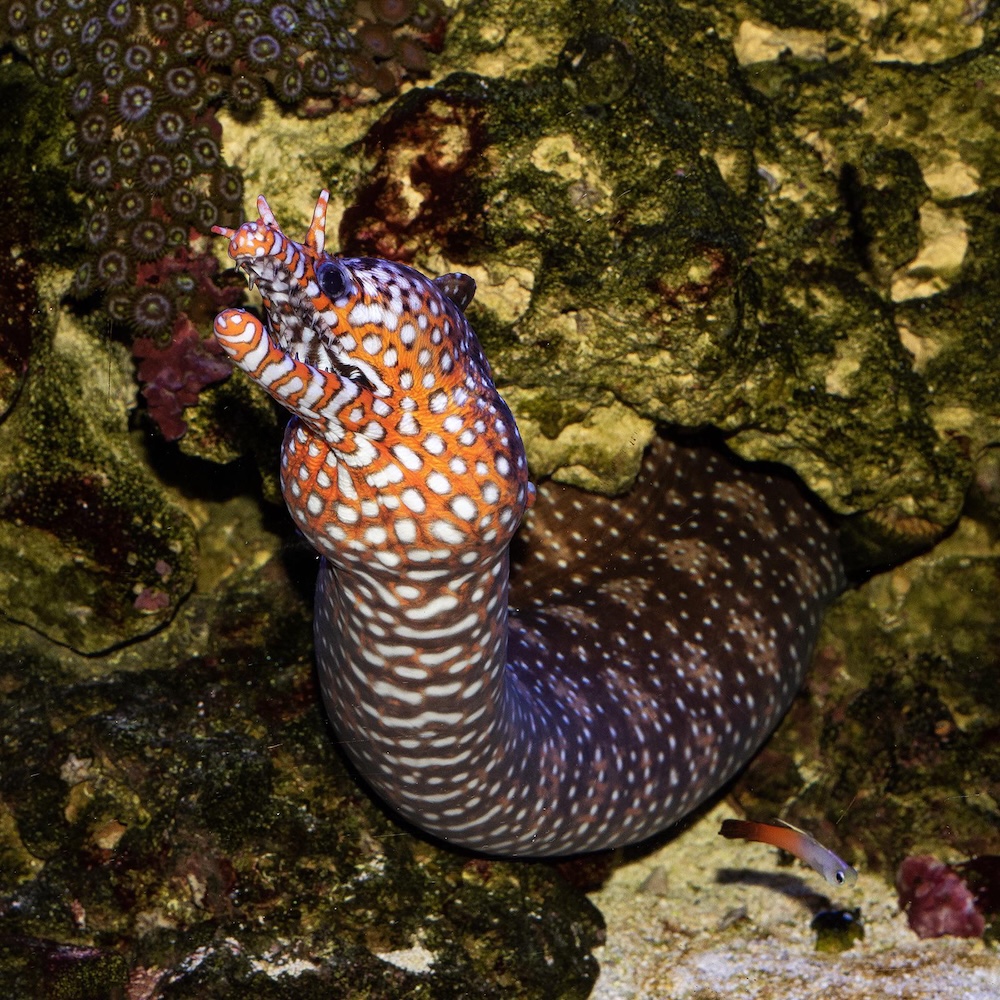
The Snowflake Eel (Echidna nebulosa), also known as the Snowflake Moray or Clouded Moray, is a species of marine eel of the family Muraenidae. It is a very commonly kept saltwater eel.
Distribution and Habitat
The Snowflake Eel is widespread throughout the Indo-Pacific area from the eastern coast of Africa throughout Micronesia including the Red Sea and to Hawaii. It is also found in the eastern Central Pacific from southern Baja California to northern Colombia. It is often found residing in seagrass beds with rock rubble, rocky shallows, intertidal reef flats, and tide pools at depths ranging from 1 to 48 meters.
Physical Description
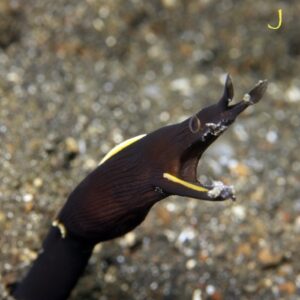
The Snowflake Eel reaches a length of 100 cm (39 in) but its common size is 50 cm (20 in). It has a blunt white snout that goes into a yellowish, brown, and black striped speckled pattern. It has a dorsal fin that runs the length of its body. It has small blunt teeth rather than sharp teeth, ideal for its diet of crustaceans. It has two yellow tubular nostrils angled down. It is scale-less and secretes a mucus over its skin.
Diet and Feeding
The Snowflake Eel is carnivorous, with a diet consisting mainly of crustaceans. In captivity it readily accepts just about any meaty foods including krill, shrimp, silversides, and octopus meat.
Behavior and Reproduction
This species is an unconfirmed protogynous hermaphrodite. It is generally hardy and well-suited to life within an aquarium. It has been known to live to 15 years and older in captivity.
Aquarium Care
It requires an aquarium of at least 55 gallons with a tight-fitting lid as eels are escape artists and can fit through surprisingly small holes. It is very hardy and well-suited to aquarium life. It is considered reef-safe with caution as it may eat small crustaceans.
Conservation Status
Classified as Least Concern by the IUCN Red List.
Reviews
There are no reviews yet.