
| Parameter | Value |
|---|---|
| Diet | Carnivore |
| dKH | 8-12 |
| Maximum Size | 22 cm (8.7 in) |
| Minimum Tank Size | 70 gallons (265 L) |
| pH | 8.1-8.4 |
| Temperament | Peaceful |
| Temperature | 72-82 F (22-28 C) |
| Weight | Approximately 100 g (3.5 oz) at maximum size |
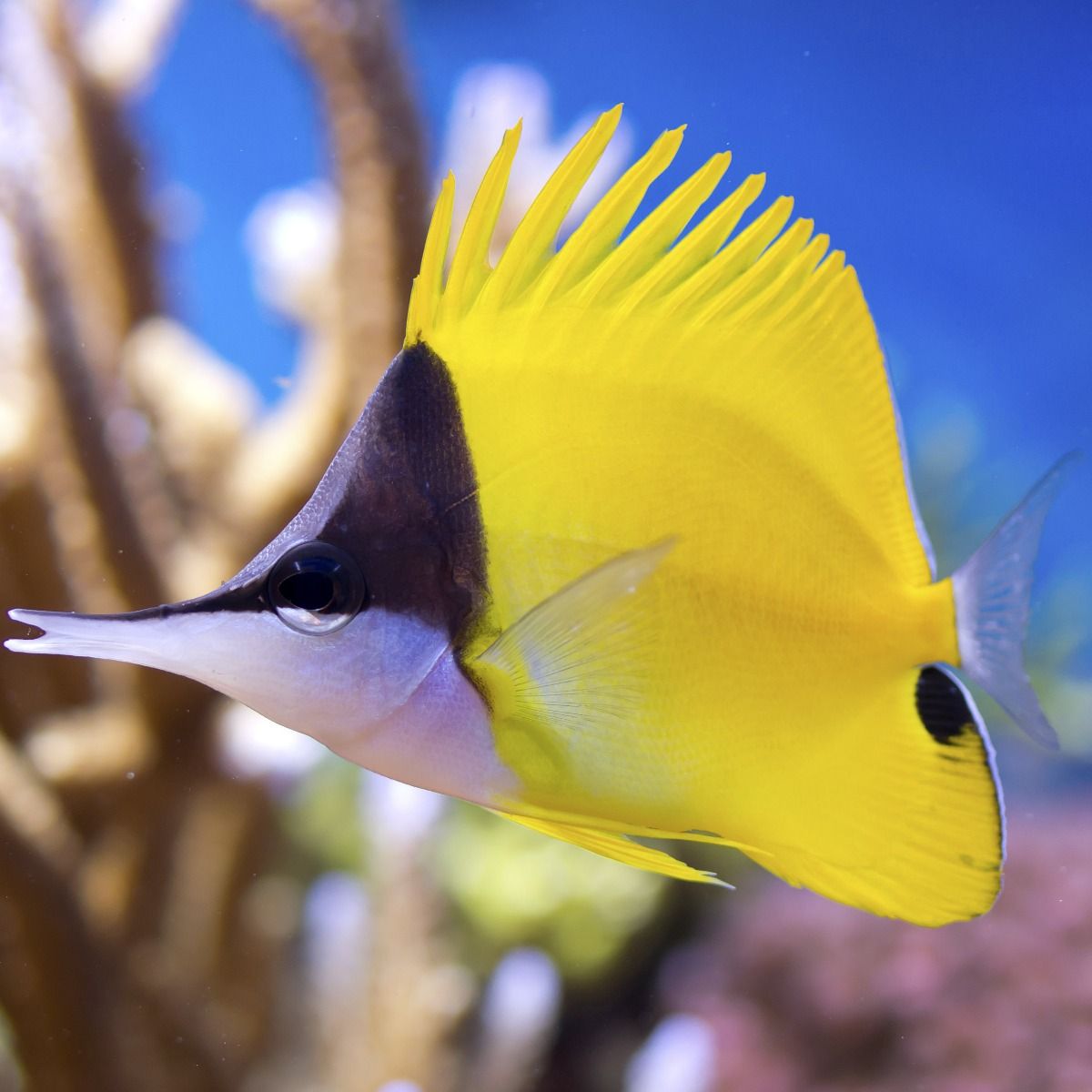
The Longnose Butterflyfish (Forcipiger flavissimus), also known as the Yellow Longnose Butterflyfish or Forceps Butterflyfish, is a species of marine fish in the family Chaetodontidae. It was first described by David Starr Jordan and Ernest Alexander McGregor in 1898.
Distribution and Habitat
The Longnose Butterflyfish is widespread throughout the tropical waters of the Indo-Pacific area from the eastern coast of Africa to Hawaii. It is found on coral reefs at various depths.
Physical Description
The Longnose Butterflyfish has a distinctive elongated snout which it uses to probe into crevices for food. The body is bright yellow with a black eye band. The dorsal fin has a distinctive pattern. This species can reach a maximum length of approximately 22 cm (8.7 in).
Diet and Feeding
The Longnose Butterflyfish feeds on small invertebrates, crustaceans, and polyps from the reef. Its long snout allows it to extract food from narrow crevices. In captivity, it accepts a varied diet including mysis shrimp, brine shrimp, and frozen meaty preparations.
Behavior and Reproduction
This species is known to be territorial. It emits sounds through complicated body movements to advertise territorial boundaries. Potential rivals can assess body size based on the duration and intensity of the sound produced. It is a monogamous species that forms pairs for breeding. Pelagic eggs are released into the water column.
Aquarium Care
The Longnose Butterflyfish requires a tank of at least 70 gallons with excellent water quality and abundant live rock with crevices for exploration. It is generally peaceful but may be territorial toward similar-looking species. It is considered relatively reef-safe compared to other butterflyfish species.
Conservation Status
Classified as Least Concern by the IUCN Red List.



Reviews
There are no reviews yet.