
| Parameter | Value |
|---|---|
| Diet | Carnivore |
| dKH | 8-12 |
| Maximum Size | 15 cm (5.9 in) |
| Minimum Tank Size | 30 gallons (114 L) |
| pH | 8.1-8.4 |
| Temperament | Aggressive |
| Temperature | 72-82 F (22-28 C) |
| Weight | Approximately 80 g (2.8 oz) at maximum size |
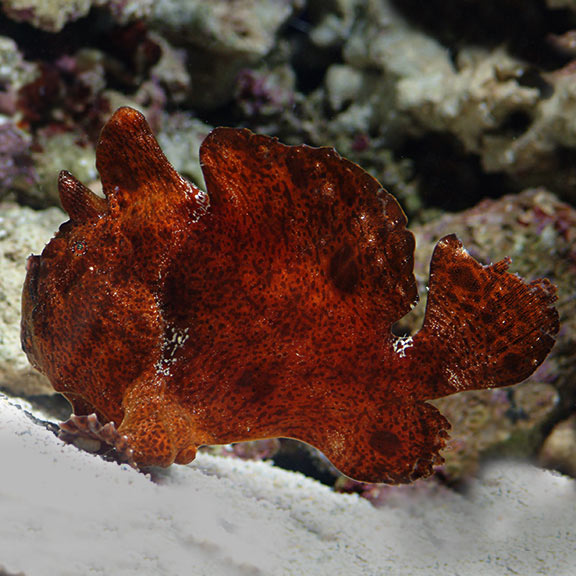
The Red/Orange Angler (Antennarius sp.) is a frogfish belonging to the family Antennariidae. This particular variant displays vibrant red to orange coloration, making it one of the more striking anglerfish species available in the aquarium trade.
Distribution and Habitat
Antennarius frogfishes are found in tropical and subtropical coastal waters worldwide, with the highest diversity in the Indo-West Pacific region. They inhabit coral reefs, rocky areas, and rubble slopes in shallow water.
Physical Description
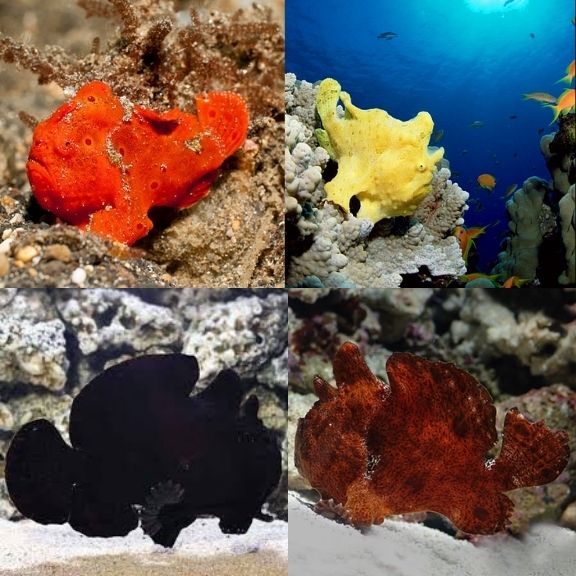
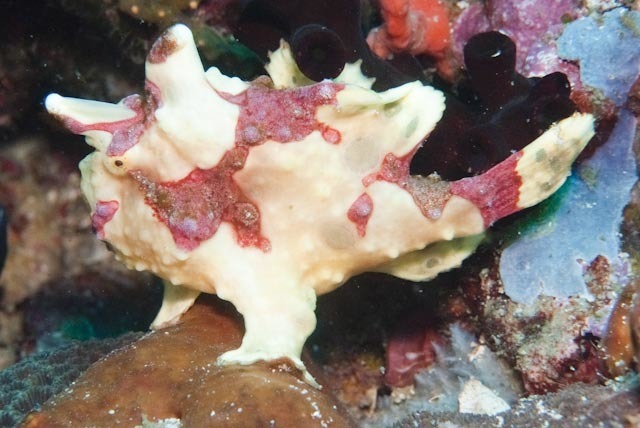
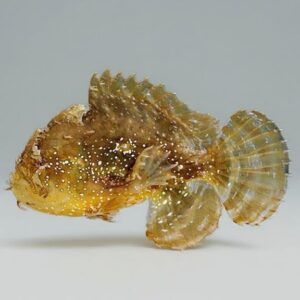
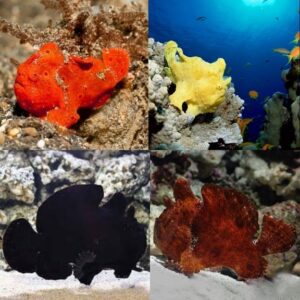
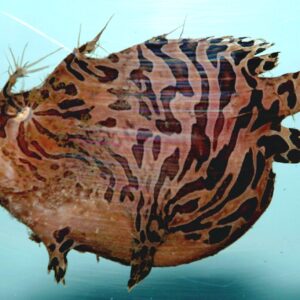
The Red/Orange Angler has the characteristic globose body of frogfishes with a large upwardly pointing mouth. The coloration ranges from bright red to orange, often with darker markings or spots. The skin is covered with small dermal spinules. The first dorsal spine is modified into an illicium or fishing rod tipped with an esca or lure used to attract prey. This species reaches approximately 15 cm (5.9 in) in maximum length.
Diet and Feeding
The Red/Orange Angler is a voracious carnivore that feeds primarily on small fish and crustaceans. In captivity, it should be fed live or frozen foods such as ghost shrimp, small fish, and krill. It can swallow prey its own size.
Behavior and Reproduction
This species has a benthic and solitary lifestyle. It uses jet-like propulsion through its gill openings for movement and can walk along the substrate using its jointed pectoral fins. It is a solitary fish that only tolerates others during mating.
Aquarium Care
The Red/Orange Angler requires a tank of at least 30 gallons with stable water conditions and abundant live rock. It is aggressive and will eat any small fish or shrimp that fits in its mouth. Only one angler should be kept per tank. It is reef-safe in that it does not bother corals.
Conservation Status
Classified as Least Concern by the IUCN Red List.
Reviews
There are no reviews yet.