
| Parameter | Value |
|---|---|
| Lighting | Low to Moderate |
| Water Flow | Low |
| Care Level | Moderate |
| Temperament | Peaceful |
| Placement | Sand bed |
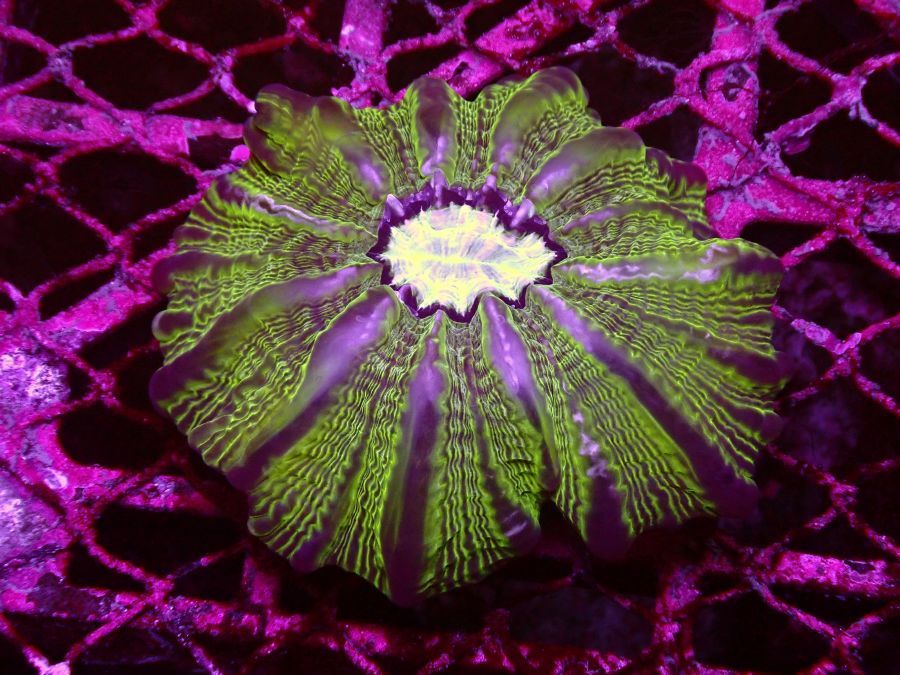
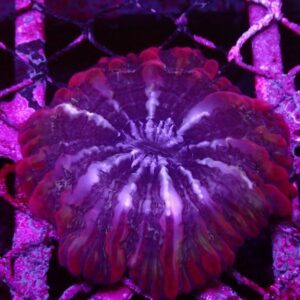
The Green Cynarina Coral is an exquisite solitary large polyp stony coral scientifically designated as Cynarina lacrymalis. Often called the button coral, it is prized for its translucent fleshy dome and brilliant emerald coloration. It forms a single magnificent polyp that serves as a captivating focal point in peaceful reef systems.
Distribution and Habitat
This species is distributed throughout tropical waters of the Indo-Pacific including the Red Sea and Great Barrier Reef. It typically settles on protected reef slopes, overhangs, and sandy sea floors at moderate depths. These sheltered habitats protect its delicate solitary structure from intense surge and direct sunlight.
Physical Description
It features a solitary circular skeleton covered by an expansive translucent mantle in striking shades of green. Prominent radiating septa are visible beneath the inflated tissue when fully expanded during peak lighting. Ringed tentacles emerge around the oral disc during nocturnal periods for active feeding.
Diet and Feeding
The coral relies heavily on the energy generated by photosynthetic zooxanthellae living within its tissues. Regular targeted supplemental feedings of finely chopped seafood, mysis shrimp, and LPS pellets foster vibrant coloration. Offering food twice a week ensures robust polyp inflation and continued vitality.
Behavior and Reproduction
It is a peaceful coral that does not produce aggressive stinging sweeper tentacles capable of harming nearby corals. Sexual reproduction occurs naturally via broadcast spawning events in open reef habitats. It remains solitary and rarely divides or forms colonies in domestic aquarium environments.
Aquarium Care
Place the coral gently on a fine sand bed where its heavy tissue will not suffer tears from sharp live rock. Maintain low to moderate lighting and gentle indirect water currents to allow complete mantle inflation. Standard reef parameters with stable alkalinity and trace elements will ensure thriving growth.
Conservation Status
While vulnerable to reef degradation and severe thermal stress events, it maintains stable populations across its range. Sustainable harvesting regulations help protect natural colonies. Classified as Least Concern by the IUCN Red List.



Reviews
There are no reviews yet.