
| Parameter | Value |
|---|---|
| Scientific Name | Carcharhinus melanopterus |
| Conservation Status | Near Threatened |
| Diet | Carnivore |
| Maximum Size | 200 cm (79 in) |
| Temperament | Aggressive |
| Reef Safe | No |
| Origin | Indo-Pacific |
| Temperature | 72-79 F (22-26 C) |
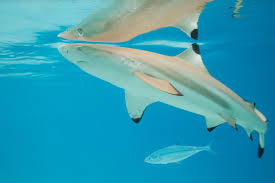
The Blacktip Reef Shark (Carcharhinus melanopterus) is a striking requiem shark of the family Carcharhinidae. Easily identified by the jet-black tips on its fins, it is one of the most abundant sharks on Indo-Pacific coral reefs. Its bold appearance and active nature make it a spectacular exhibit species.
Distribution and Habitat
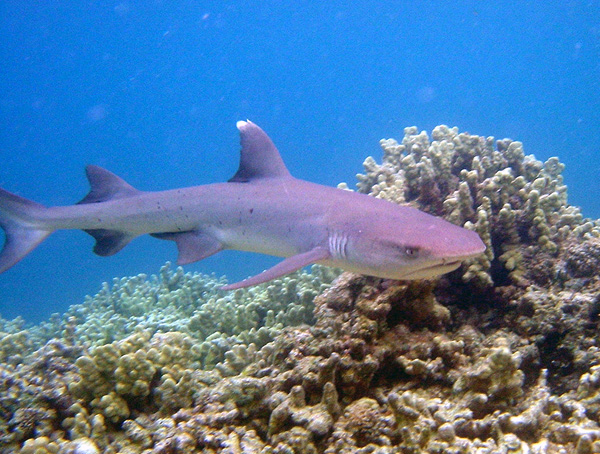
The Blacktip Reef Shark is found throughout the tropical Indo-Pacific, from the Red Sea and eastern Africa to the islands of French Polynesia and Hawaii. It inhabits shallow coral reefs, reef flats, and lagoons, preferring clear warm water at depths of less than 75 meters. Juveniles remain in shallow nursery areas.
Physical Description
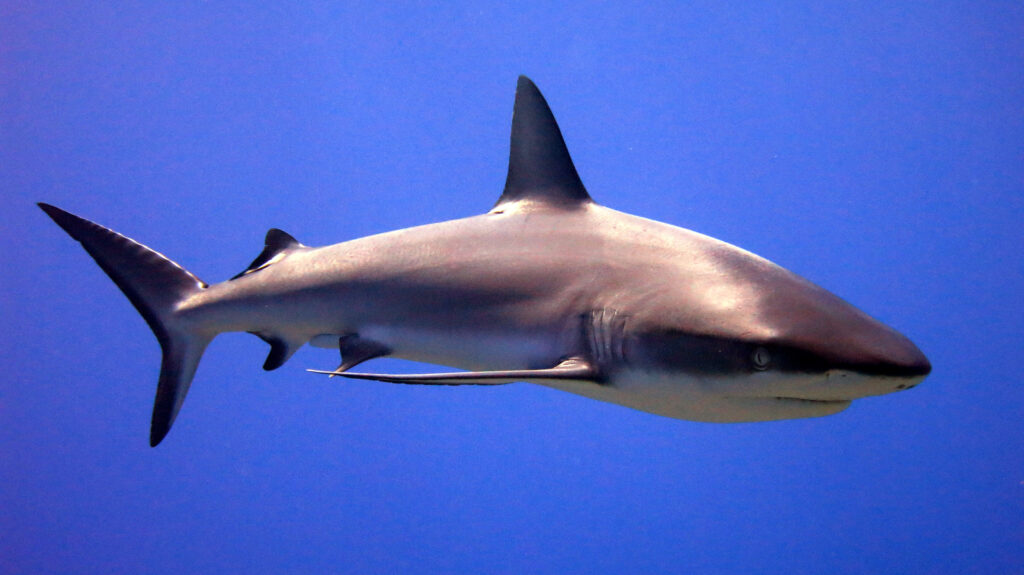
The Blacktip Reef Shark has a slender streamlined body with a short bluntly rounded snout and large round eyes. Its back and flanks are a bronze-to-grey colour fading to a pale white belly. The most distinguishing feature is the conspicuous black tip on the first dorsal fin and the black margins on all other fins. It reaches 200 cm (79 inches).
Diet and Feeding
The Blacktip Reef Shark is an active diurnal carnivore that feeds primarily on small reef fish, octopus, and crustaceans. It hunts in shallow reef flats, often pursuing prey through lagoons during rising tides. In aquariums it is fed whole fish, squid, and shrimp, and requires regular generous feeding to sustain its high metabolism.
Behavior and Reproduction
The Blacktip Reef Shark is an agile constantly swimming species that forms small loose schools in the wild. It is viviparous, with females giving birth to litters of live pups after a gestation of eight to sixteen months. Highly responsive, it can be aggressive around food and is a powerful fast-moving animal.
Aquarium Care
The Blacktip Reef Shark is absolutely unsuited to home aquariums. It requires an enclosure of at least 2000 gallons (7571 L) with a long unobstructed swimming channel and powerful reliable filtration. It is maintained almost exclusively by public aquariums. It is not reef safe and should never be housed with invertebrates.
Conservation Status
Classified as Near Threatened by the IUCN Red List.

Reviews
There are no reviews yet.